Established in 2003, Al-Furqaan Foundation is now North America’s LARGEST Quran distributor, sharing millions of copies of The Clear Quran® Series by Dr. Mustafa Khattab with both Muslims and non-Muslims. By Allah’s (SWT) grace and with your support, our efforts have resulted in thousands embracing Islam.
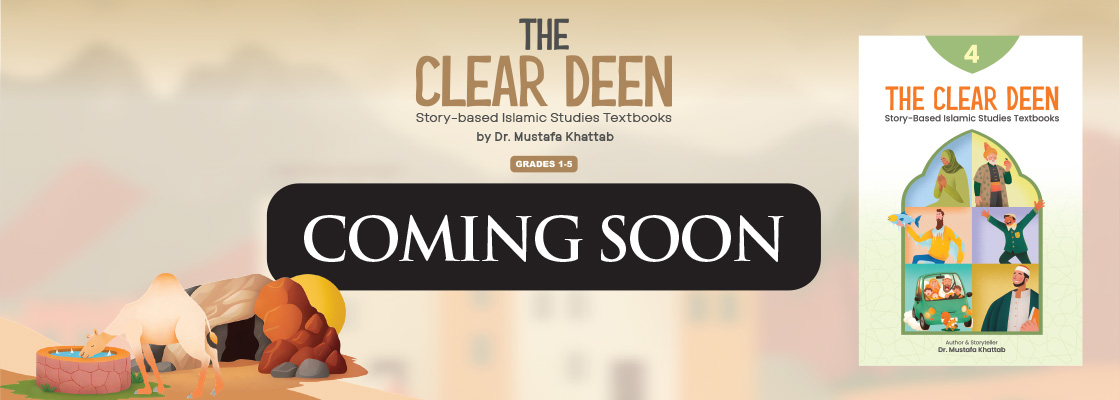
We are now humbled to introduce our latest endeavor: THE CLEAR DEEN – a comprehensive Islamic curriculum focusing on ta’leem (learning), tarbiyah (character development), and tazkiyah (spiritual growth). Rooted in Islam, engaging and practical, this curriculum will follow the ESA model — Engage, Study, Activate. In Shaa Allah, we will begin by releasing textbooks, workbooks, and teacher/parent guides for Grades 1-5.
THE CLEAR DEEN IS THE WORLD’S 1st ISLAMIC STUDIES CURRICULUM BUILT ENTIRELY ON STORYTELLING
- The Clear Deen curriculum takes Islamic studies to the next level, making it engaging, practical, and transformative. With the power of storytelling, a captivating style, and creative illustrations, it focuses on Ta’leem (education), Tarbiyah (character development), and Tazkiyah (spiritual growth).
- What makes The Clear Deen unique is its blend of timeless, authentic Islamic knowledge with modern, impactful teaching methods like ESA (Engage, Study, Activate) and SEL (Social-Emotional Learning).
- Each lesson is reinforced with interactive activities, workbook exercises, and teacher guides.
- Covering the sirah of the Prophet ﷺ, Quranic vocabulary, fiqh, ‘aqidah, tafsir, azkar, akhlaq, leadership, and Islamic history, The Clear Deen is perfect for full-time schools, weekend schools, and homeschooling.
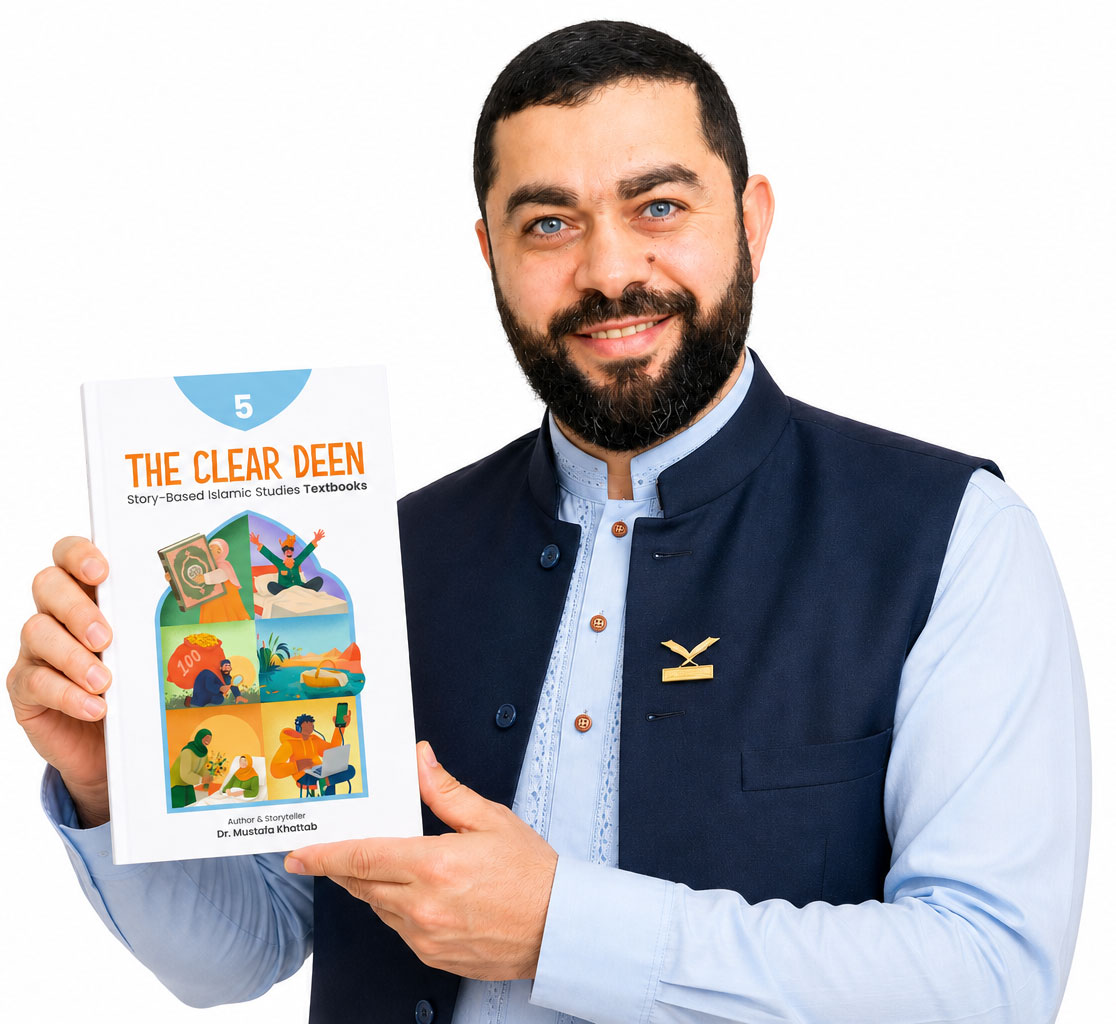
Dr. Mustafa Khattab
Resident Scholar, Al-Furqaan Foundation & Author of The Clear Quran Series
INTRODUCTION
“The mind is not a vessel to be filled, but a fire to be kindled.”
Plutarch, Greek historian, d. 120 CE
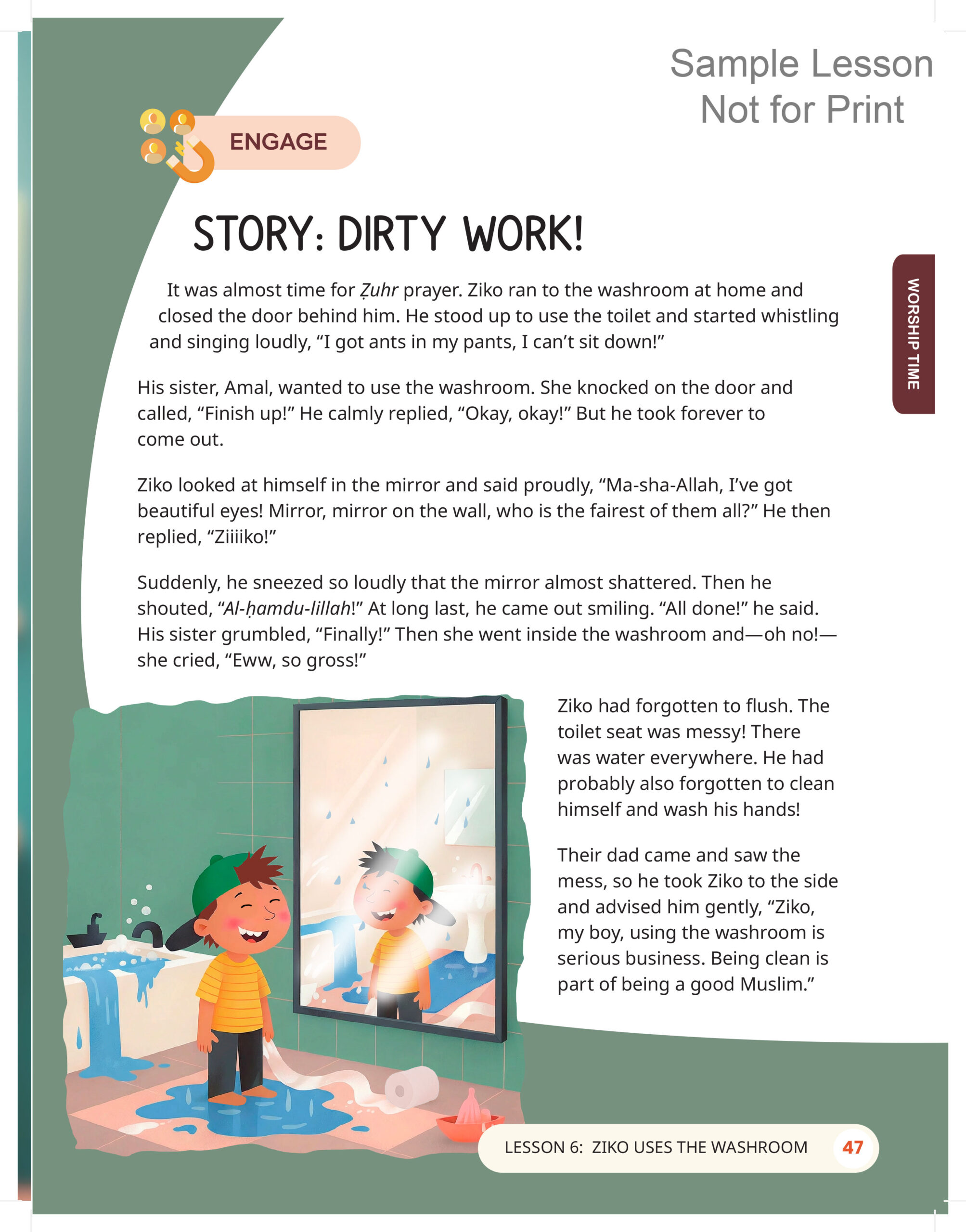
Textbook Sample Lesson
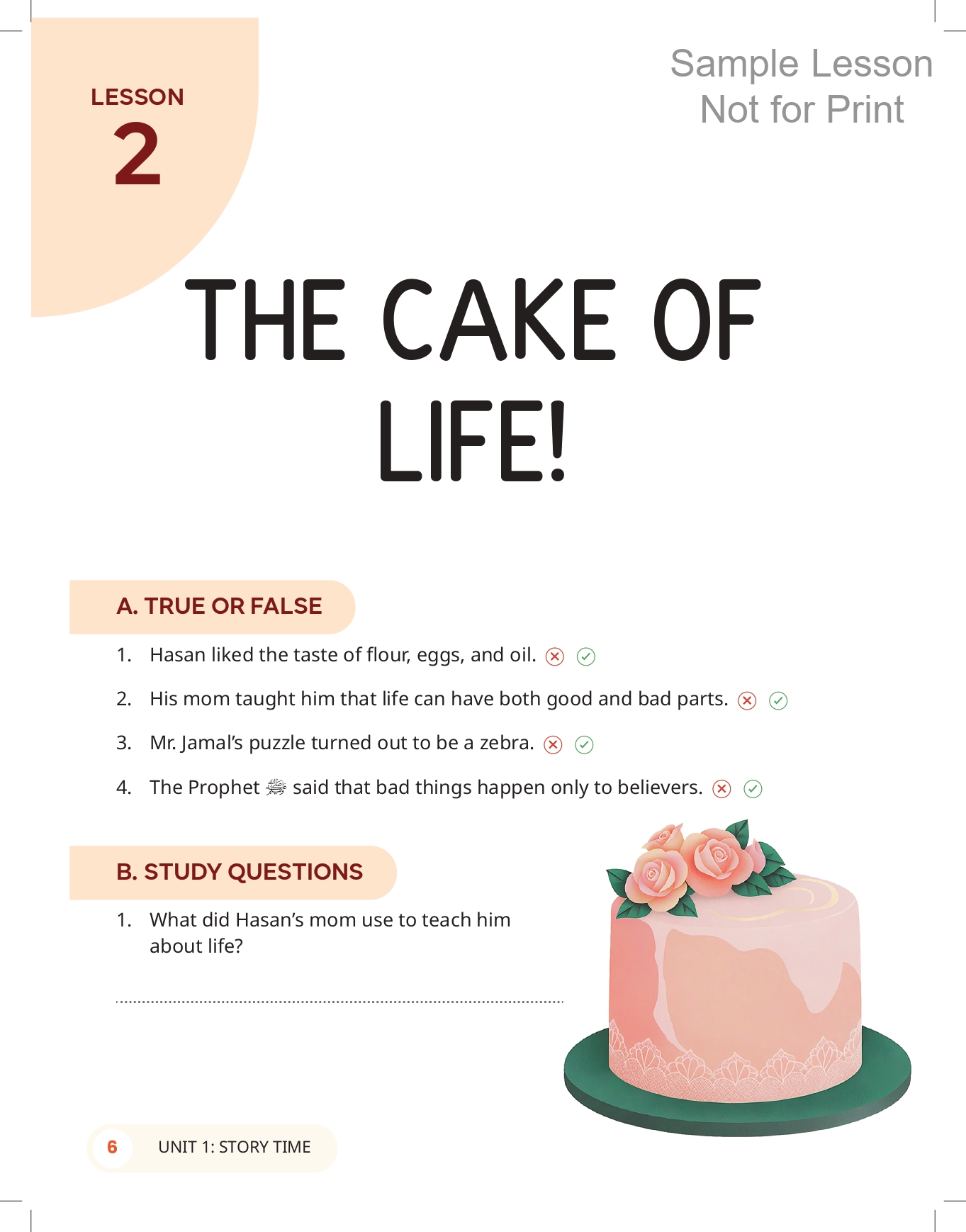
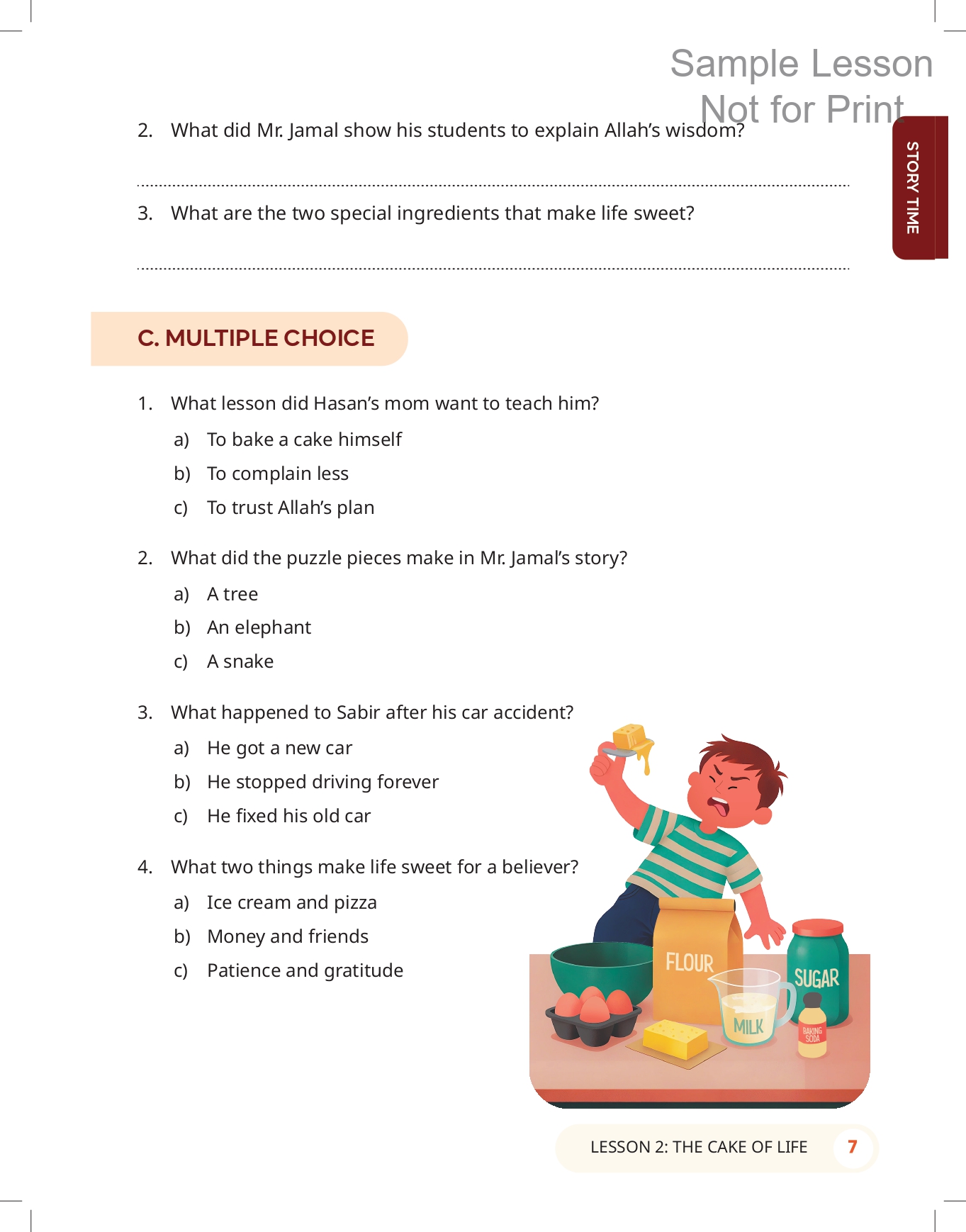
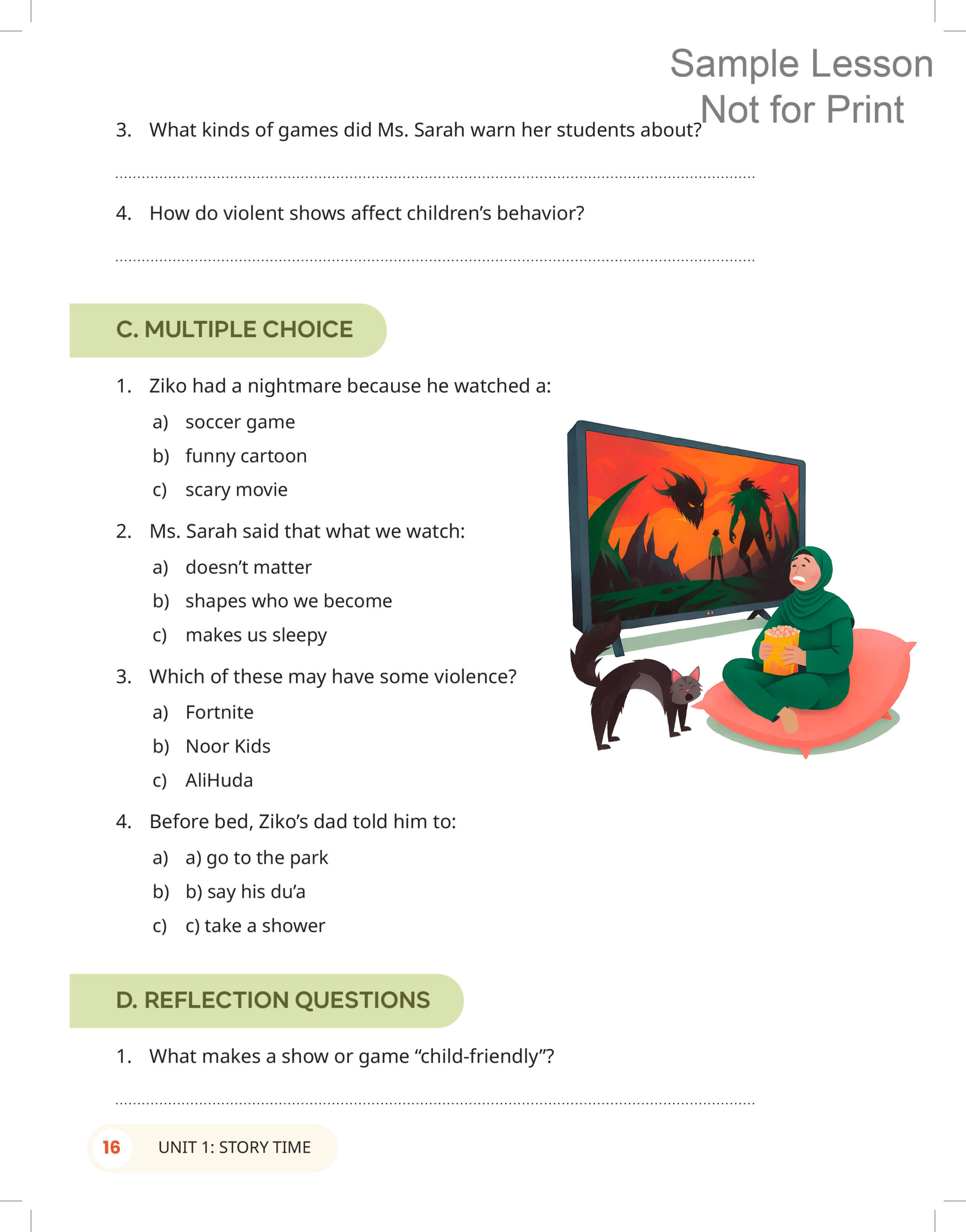
Workbook Sample Lesson
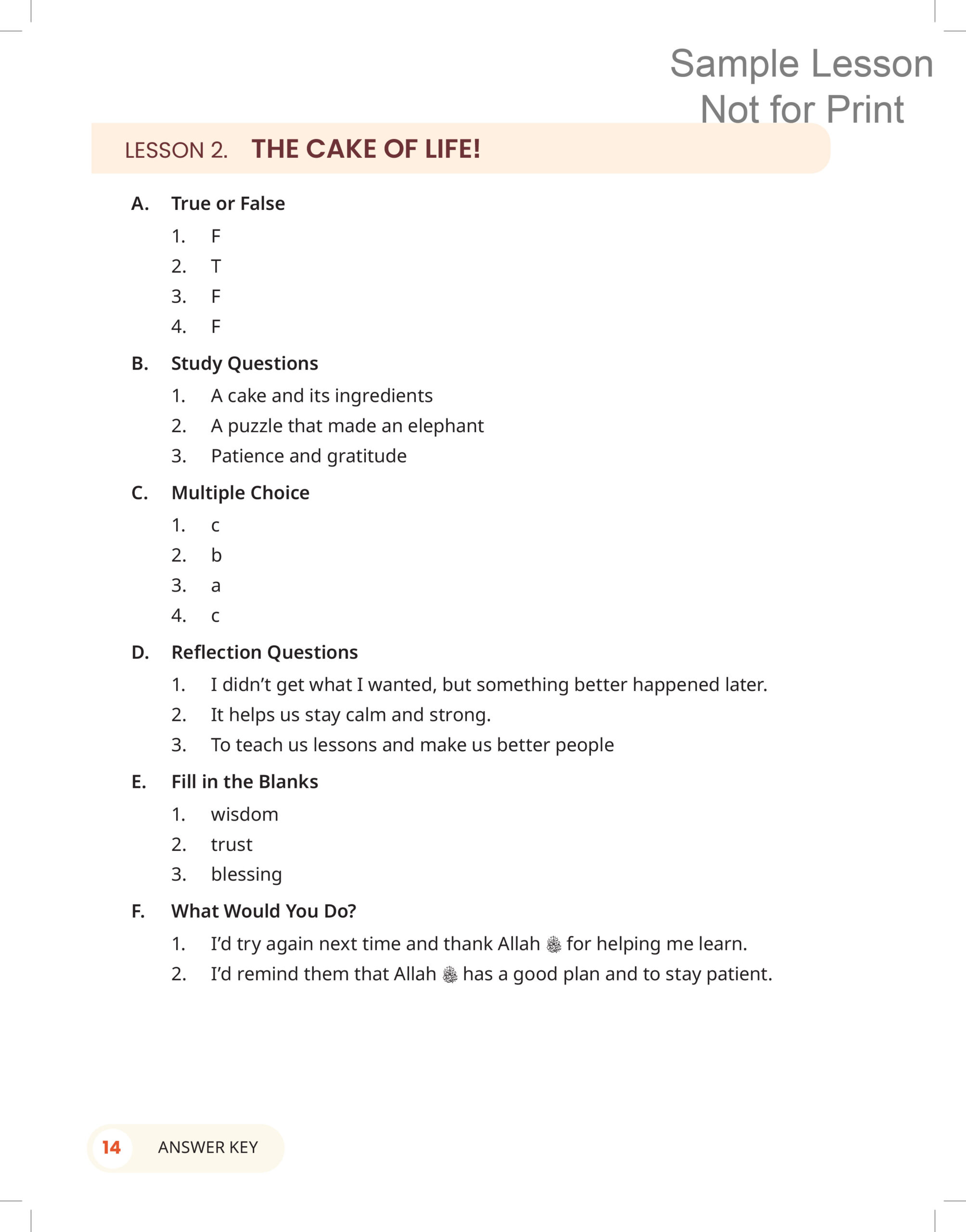
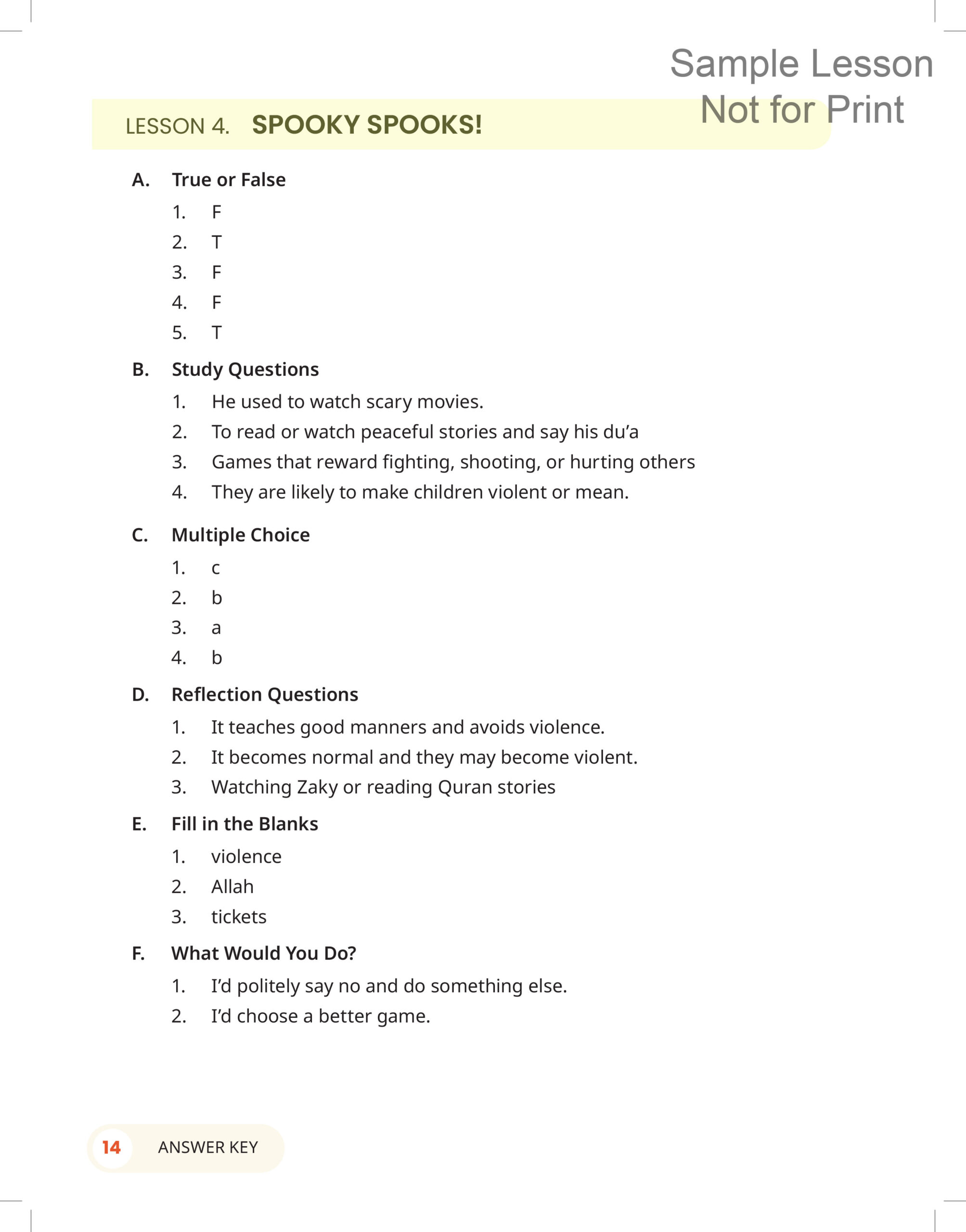
Pacing Chart
UNIT 2: WORSHIP TIME
5:39
3:14
1:24
5:10
Quran Time Recitations
3:16
1:49
Textbook Sample Lesson
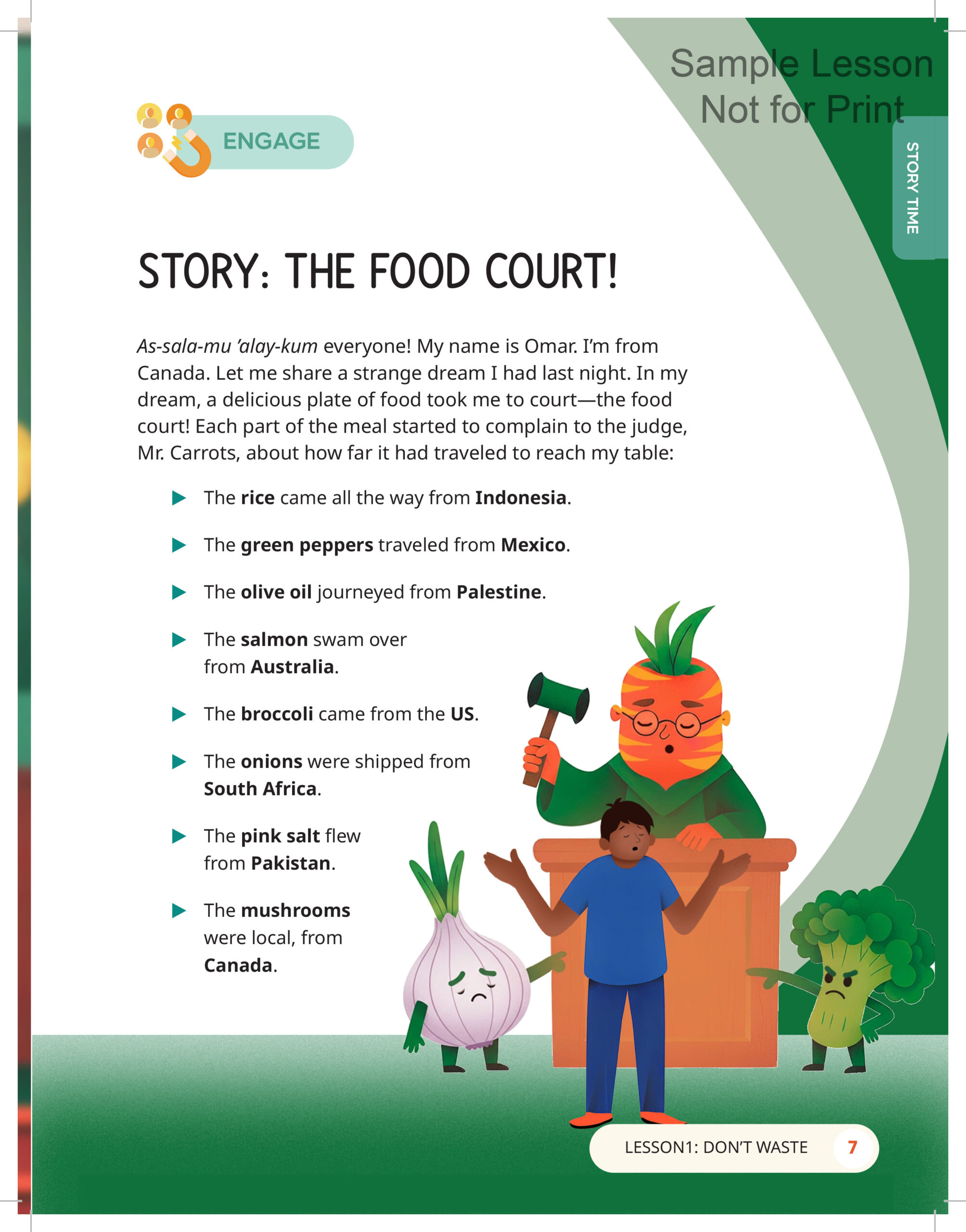
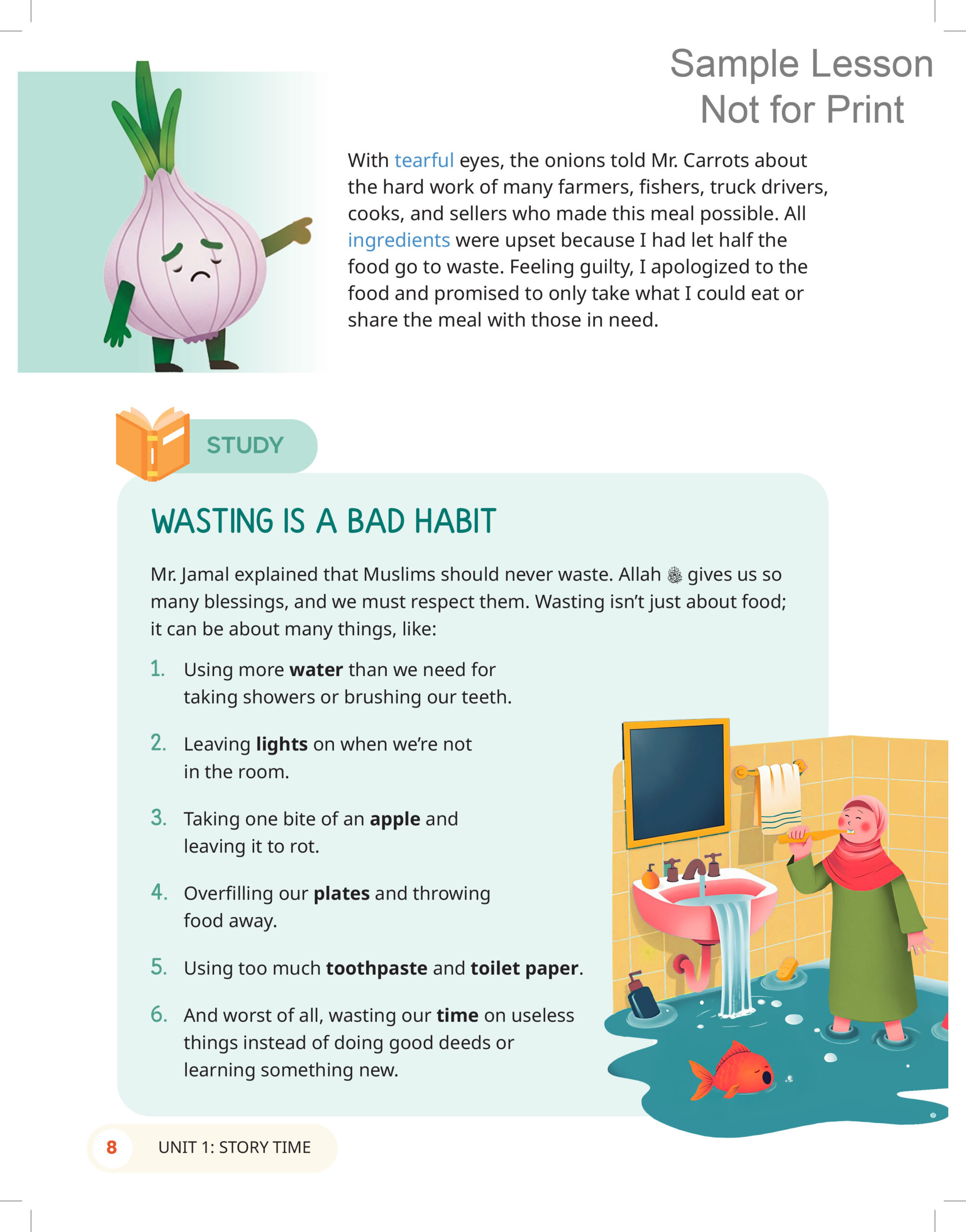
UNIT 1: STORY TIME
3:02
3:18
UNIT 2: WORSHIP TIME
7:00
4:48
6:58
12:18
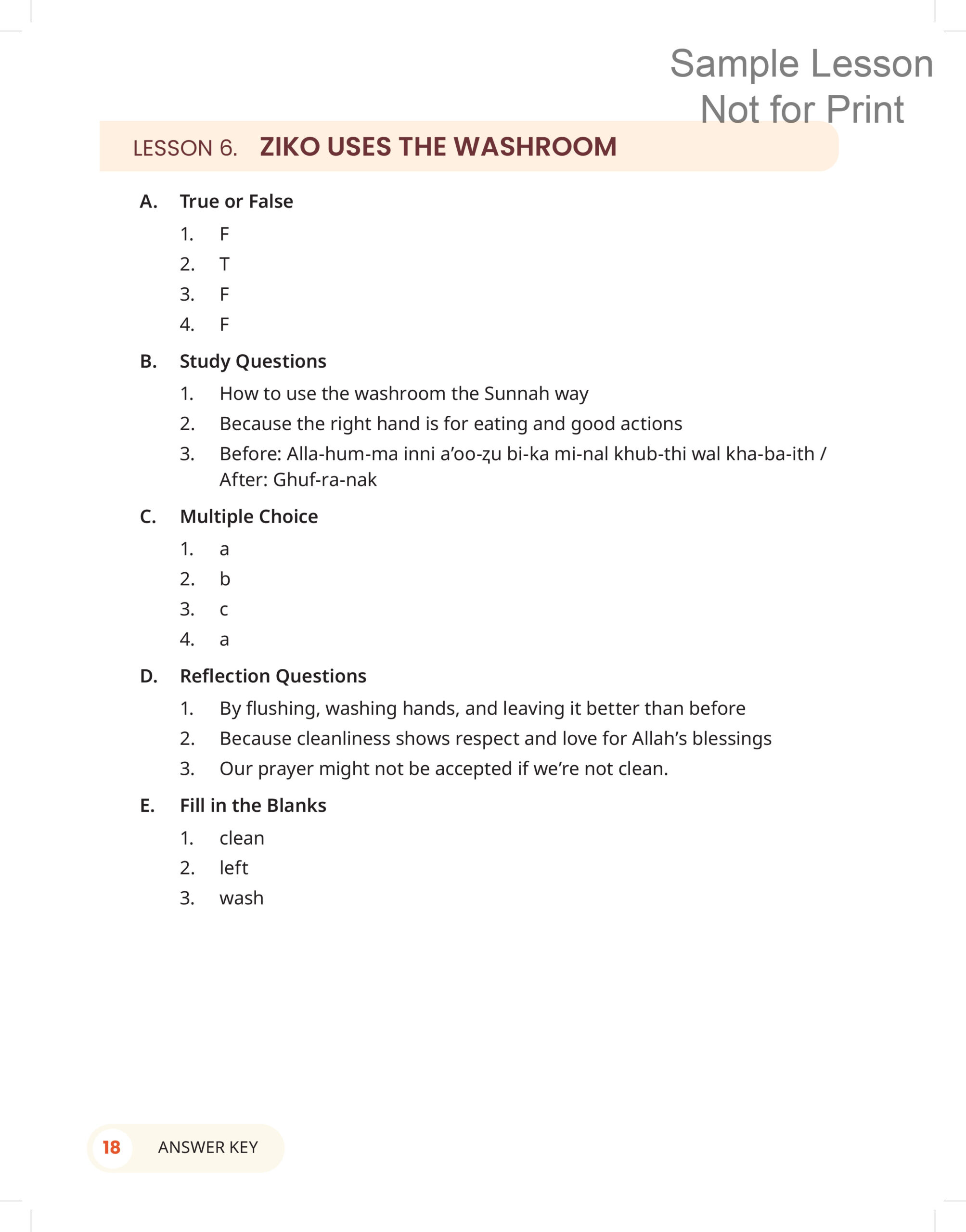
Workbook Sample Lesson
Pacing Chart
Quran Time Recitations
3:02
1:59
2:28
Textbook Sample Lesson
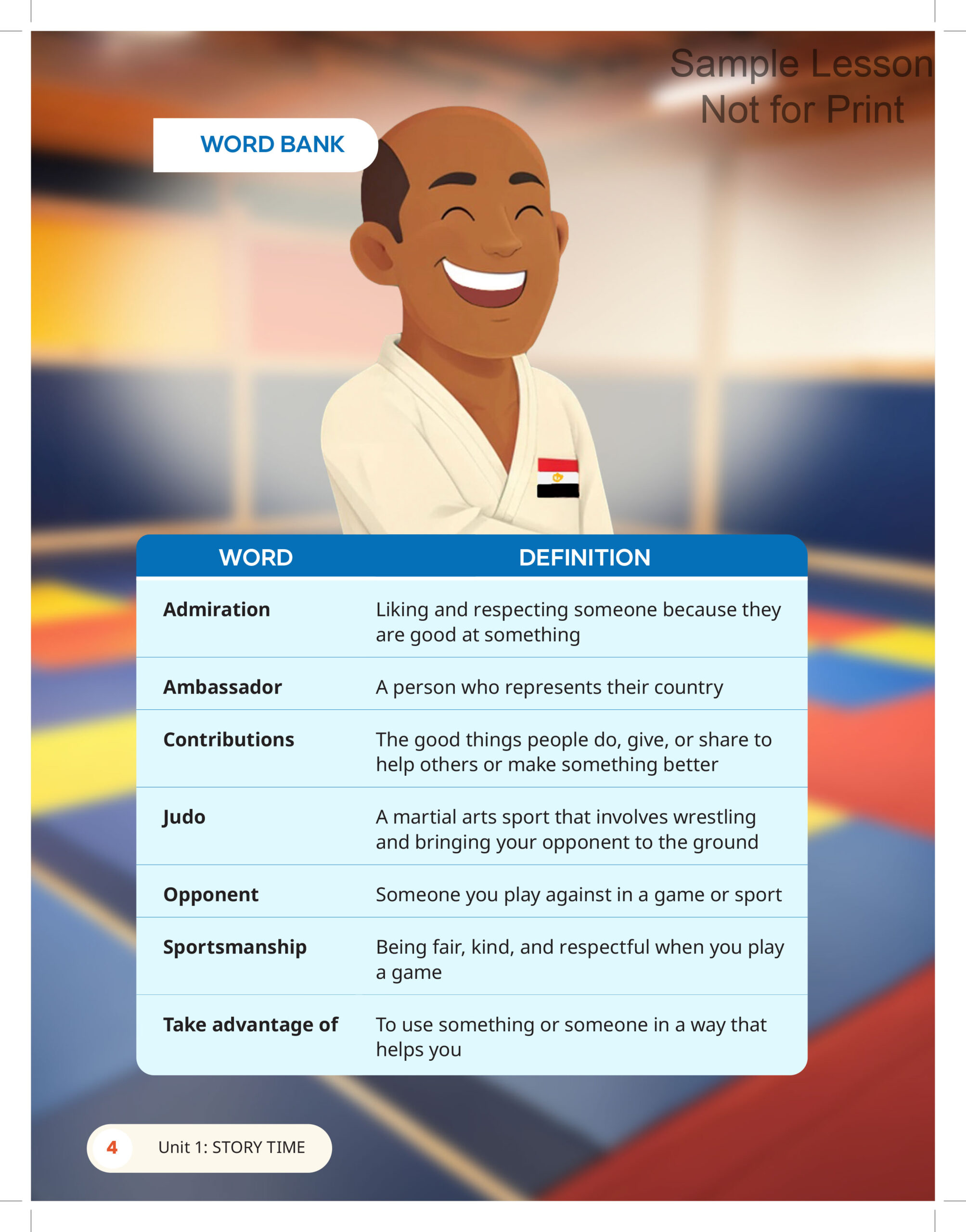
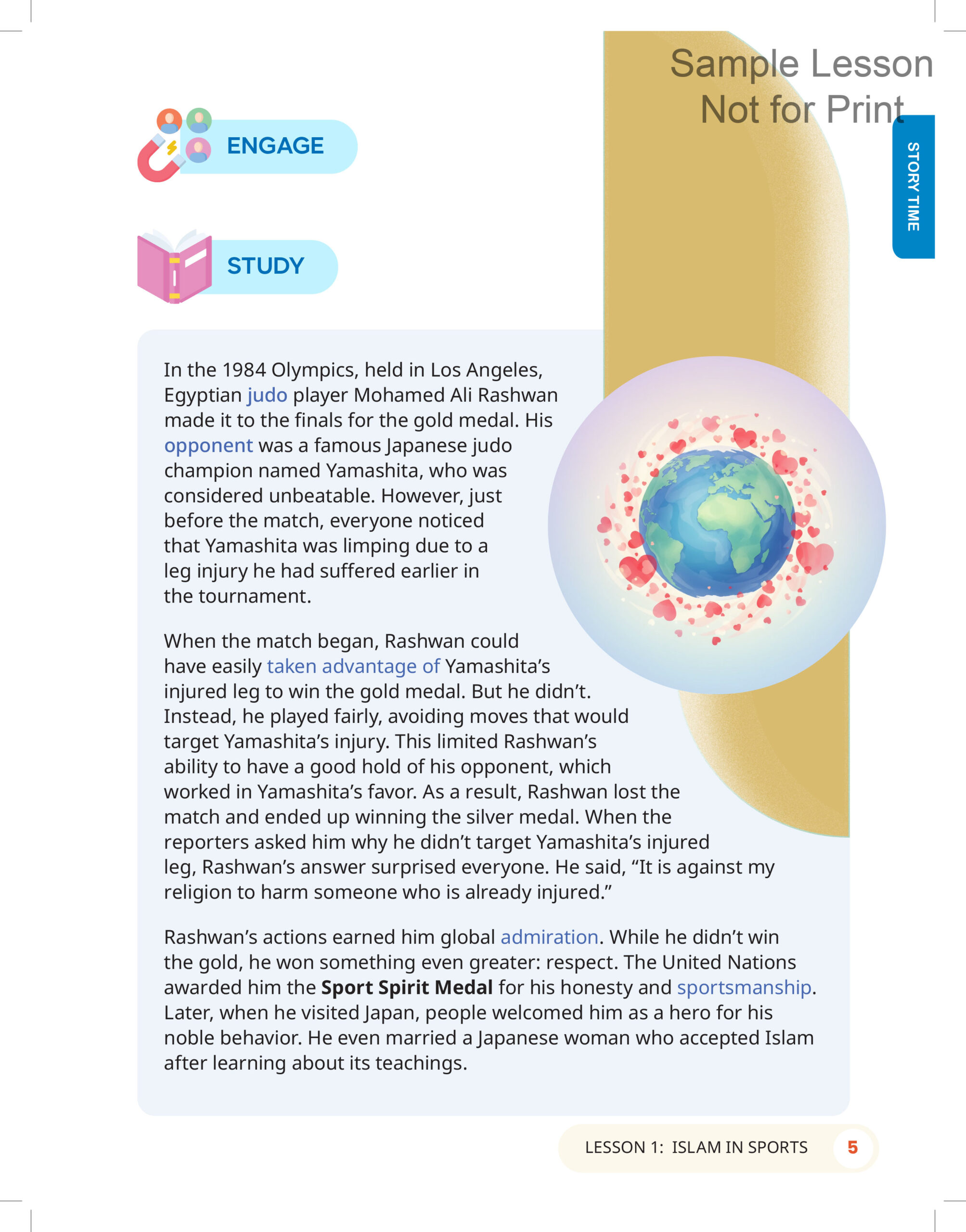
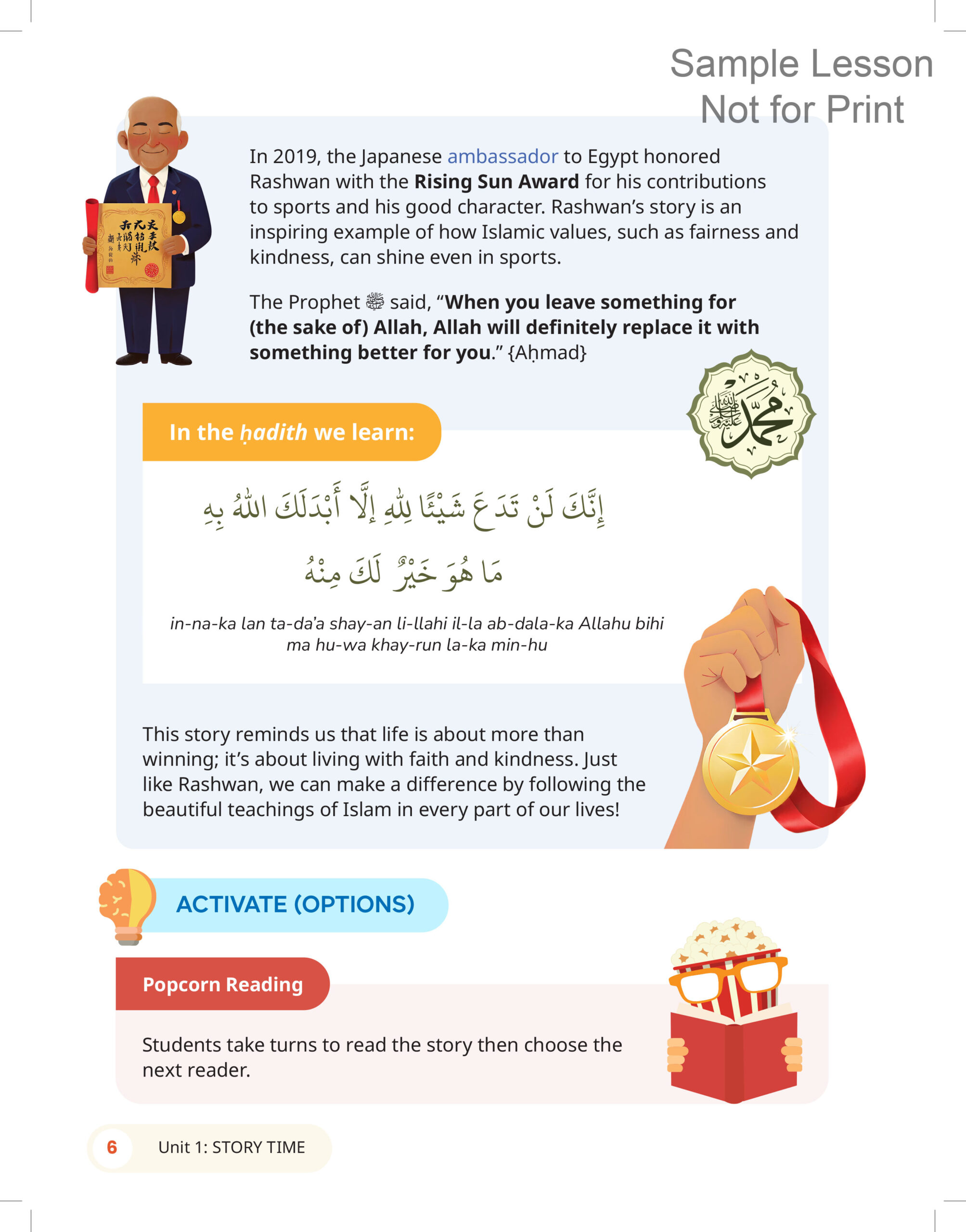
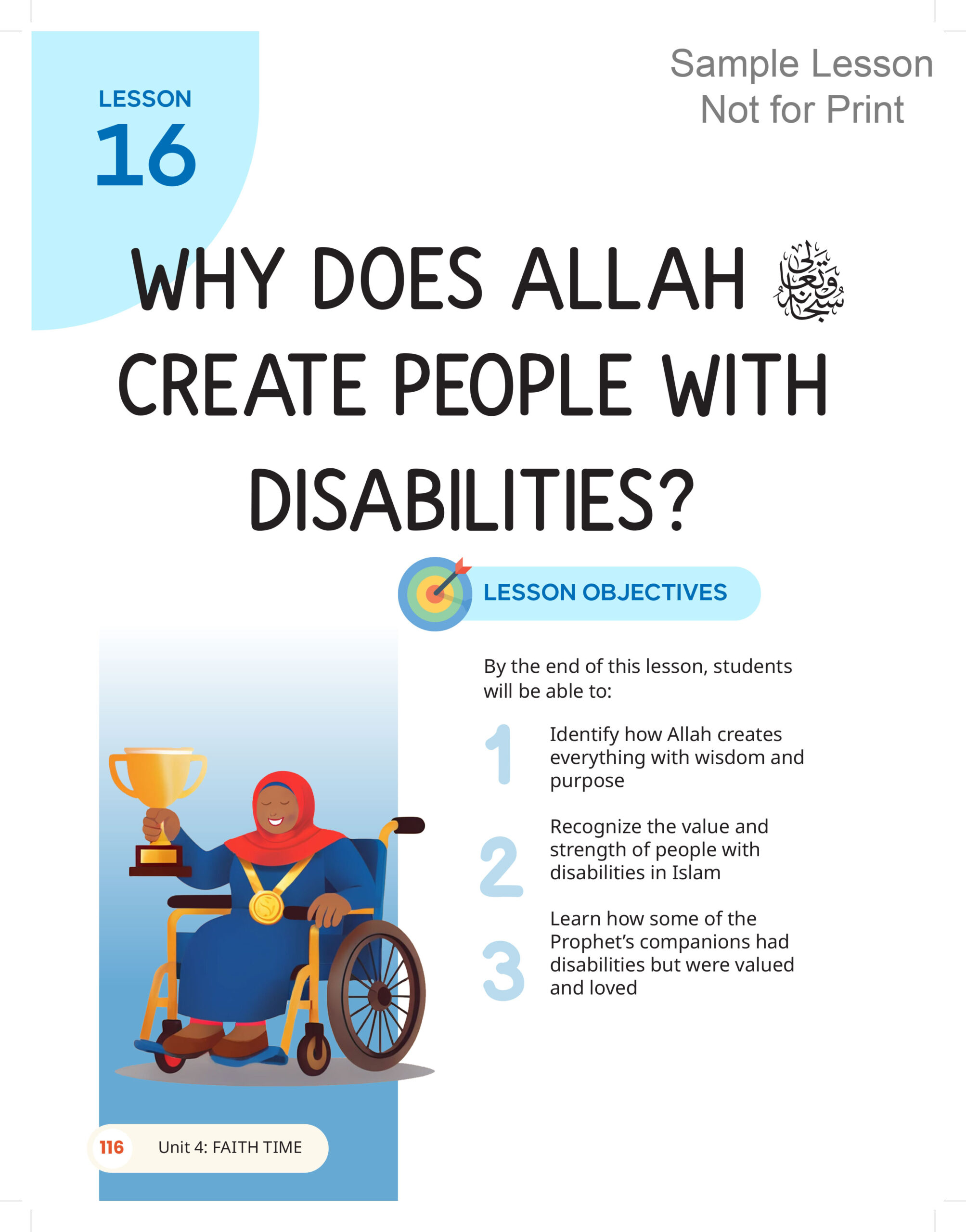
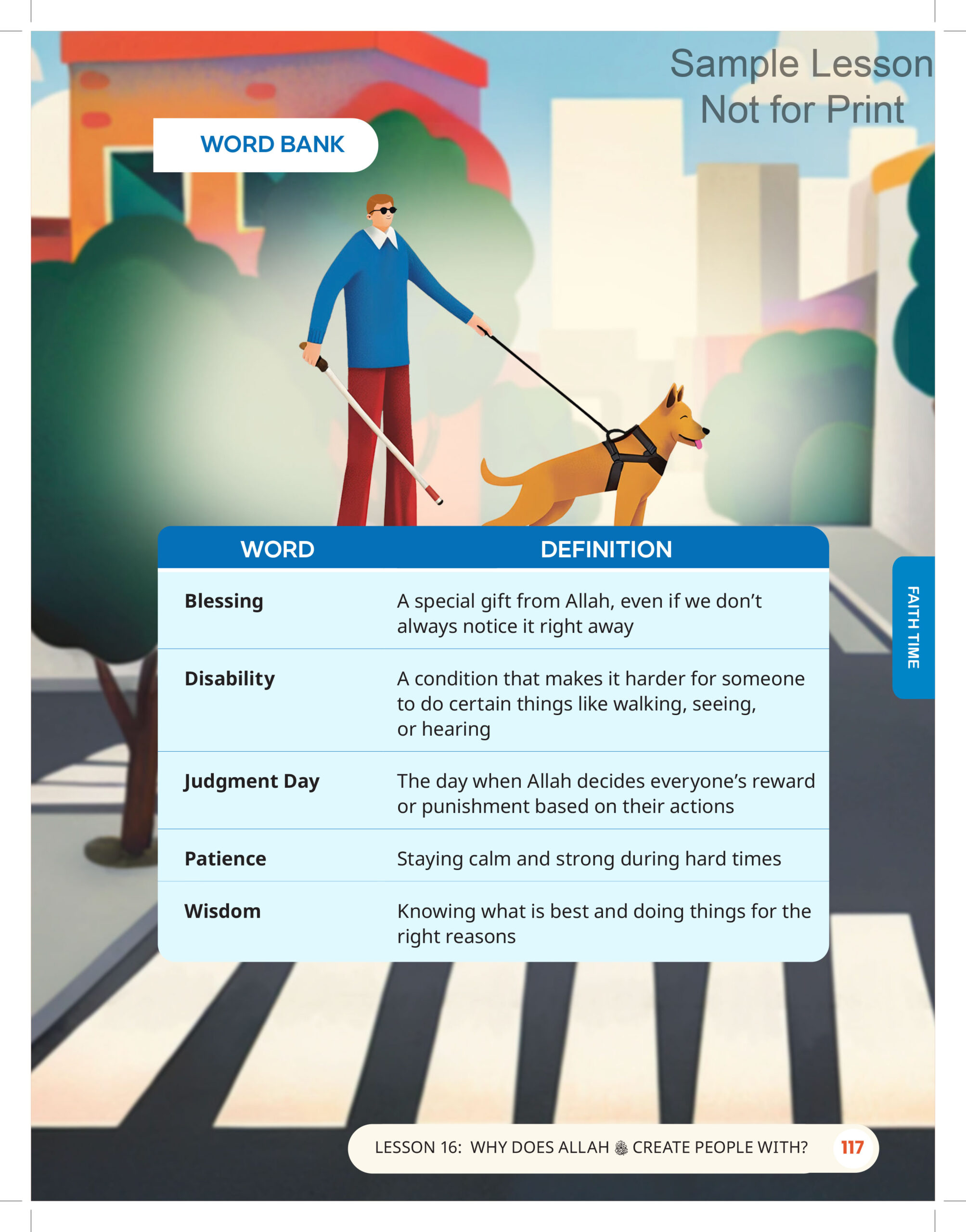
UNIT 1: STORY TIME
2:27
4:03
3:32
UNIT 3: SIRAH TIME
3:09
UNIT 4: FAITH TIME
3:41
3:26
4:17
4:28
3:12
1:53
8:50
4:02
UNIT 6: HISTORY TIME
8:39
UNIT 7: AZKAR TIME
3:43
Workbook Sample Lesson
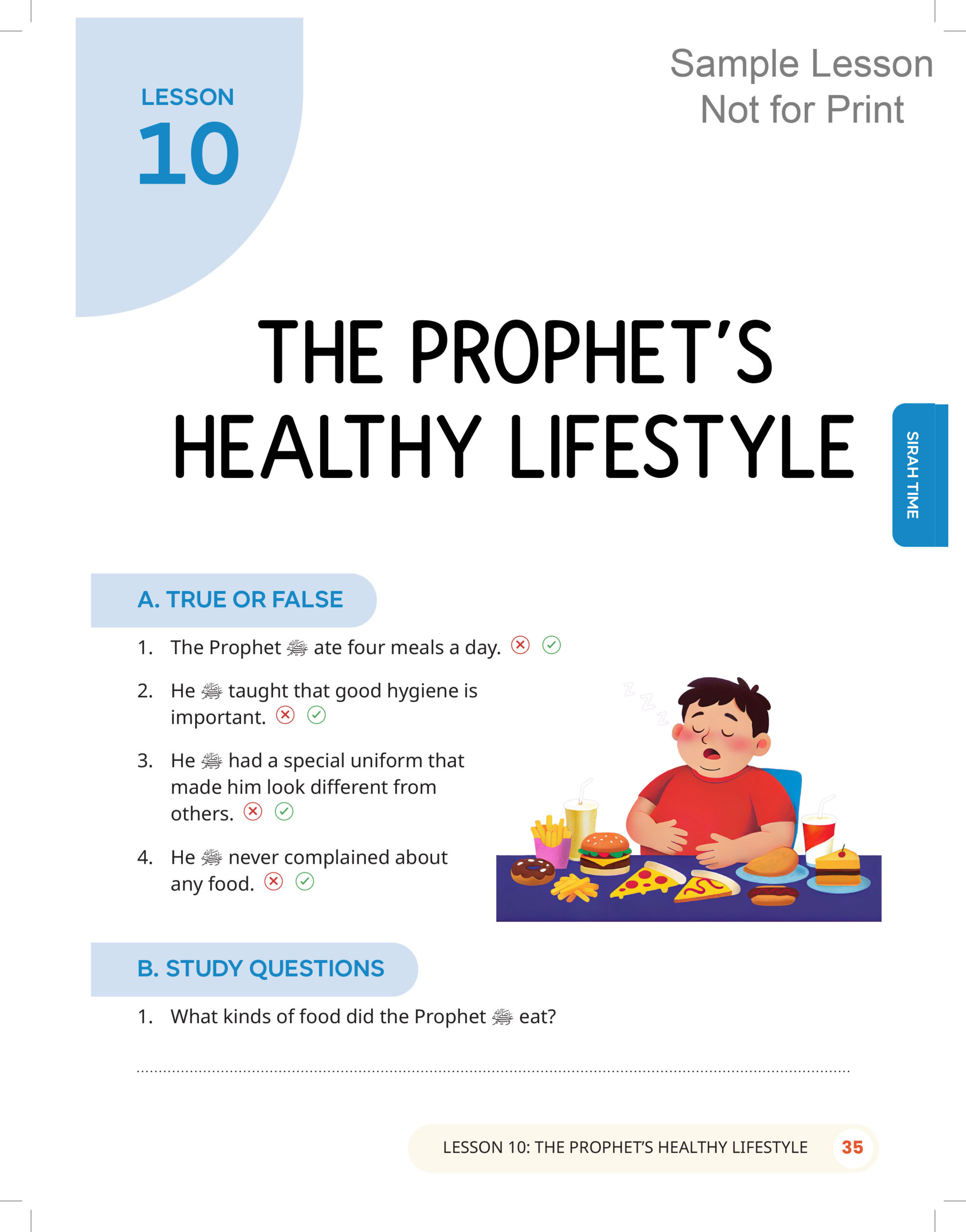
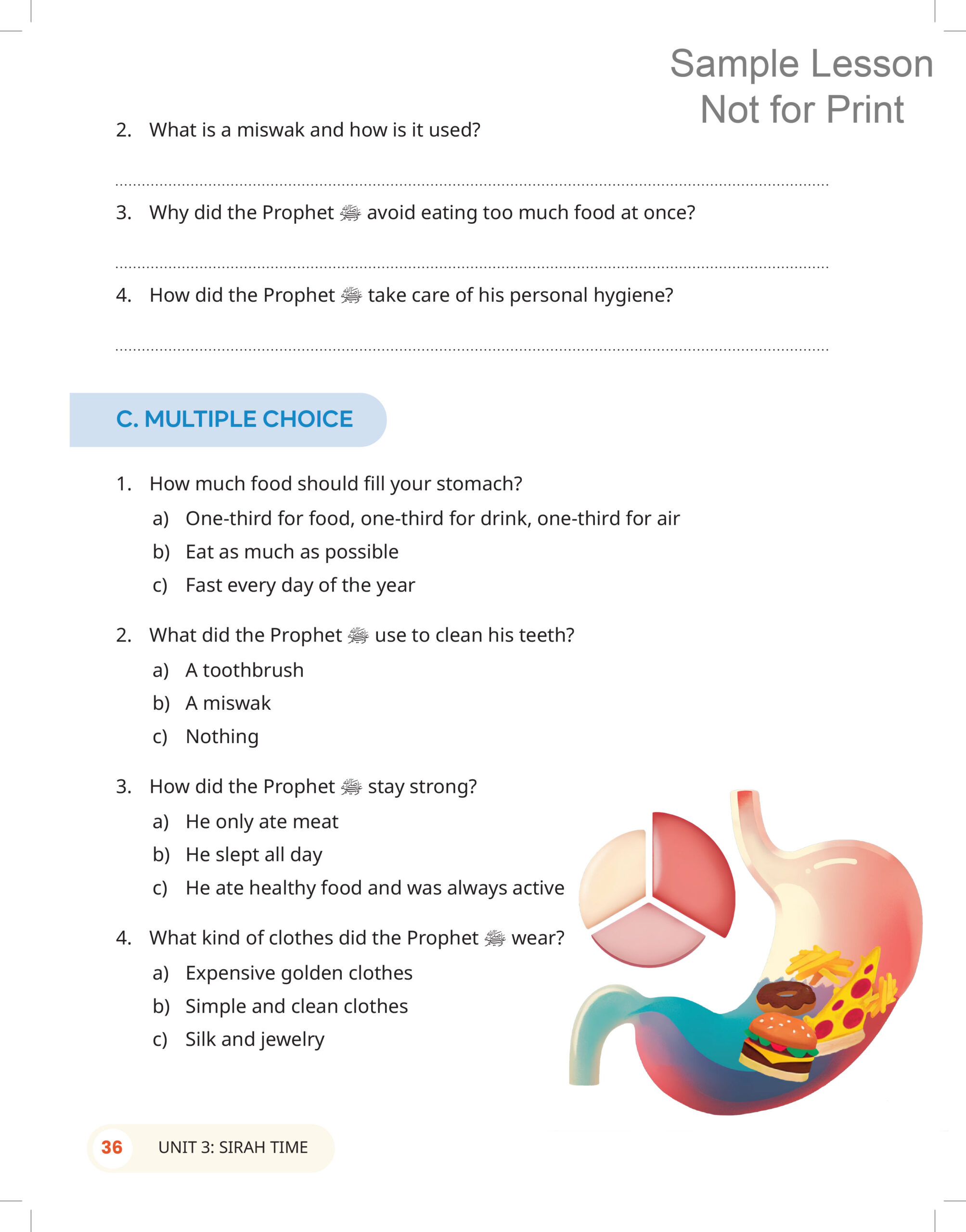
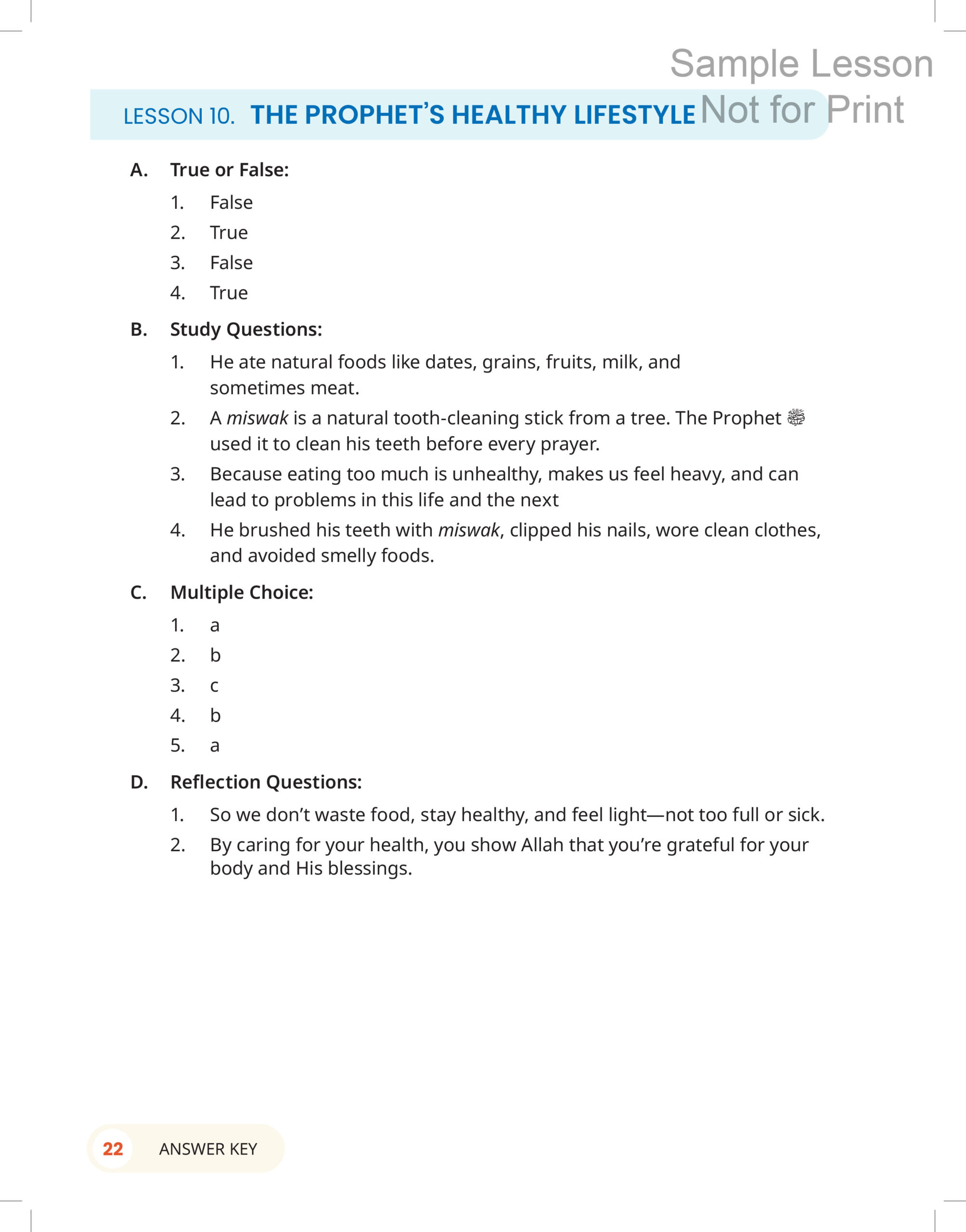
Pacing Chart
Quran Time Recitations
2:22
3:51
Textbook Sample Lesson
UNIT 1: STORY TIME
5:40
UNIT 3: SIRAH TIME
9:46
UNIT 5: QURAN TIME
5:06
5:00
UNIT 7: AZKAR TIME
1:53
Workbook Sample Lesson
Pacing Chart
Quran Time Recitations
6:55
2:33
2:39
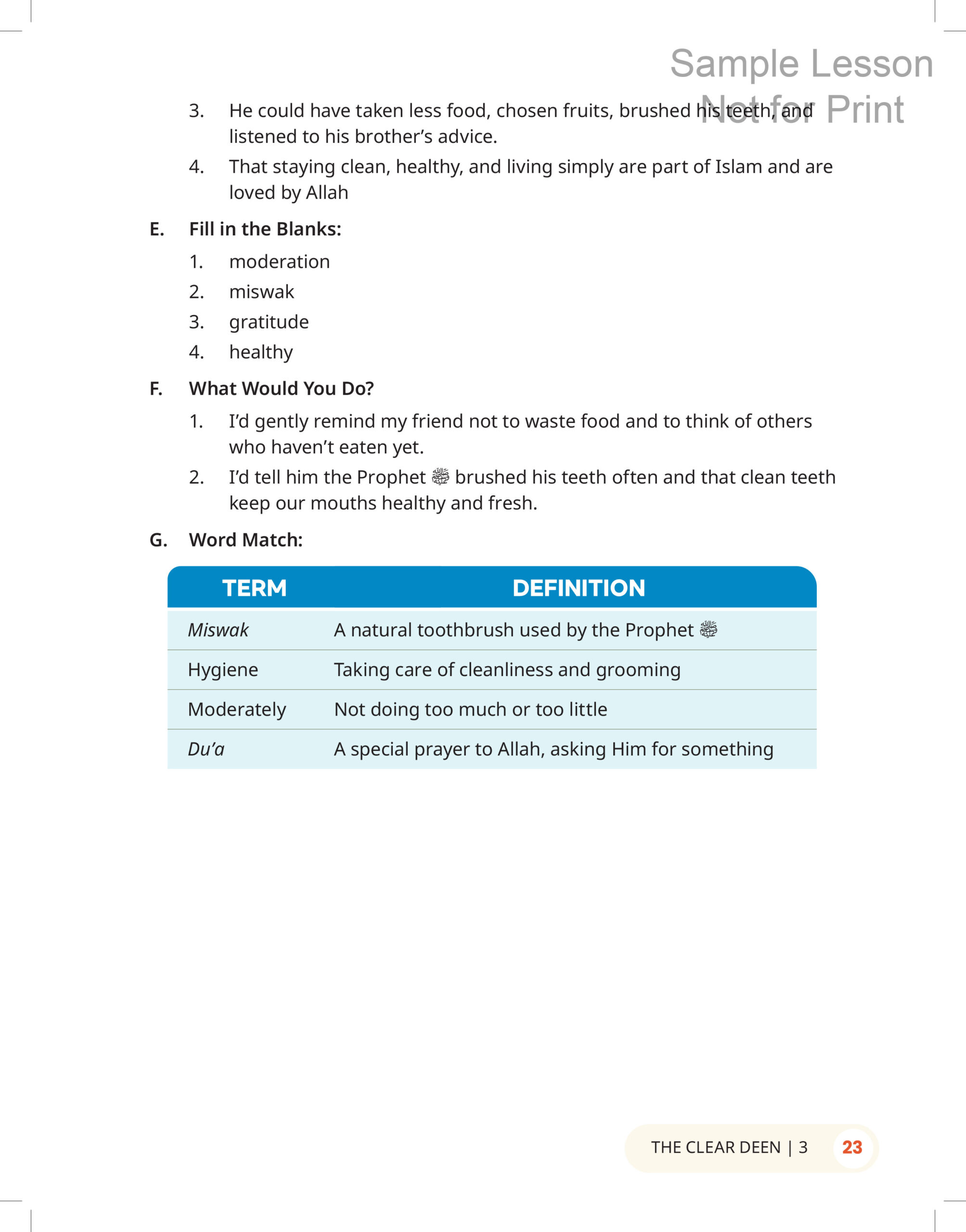
Textbook Sample Lesson
UNIT 2: WORSHIP TIME
2:34
UNIT 7: AZKAR TIME
0:58
UNIT 12: THE INCREDIBLE STORIES OF SALMAN AND ‘OMAIR
5:57
Workbook Sample Lesson
Pacing Chart
Quran Time Recitations
22:02
10:47
15:47
SYLLABUS OVERVIEW (GRADES 1-5)
As shown in the following Syllabus Overview, grades 1-5 cover 150 lessons that have been carefully selected and crafted to offer a holistic and balanced approach to Islamic studies. Built on ta’leem, tarbiyah, and tazkiyah, these story-based lessons are academically strong, developmentally appropriate, and spiritually uplifting. The goal of this series is to inspire young Muslims to internalize, love, and live their deen.
All units grouped by theme across the five grades
STORY TIME (Akhlaq & Good Manners)
| Grade 1 | Grade 2 | Grade 3 | Grade 4 | Grade 5 |
|---|---|---|---|---|
| The green balloons | Don’t waste! | Islam in sports | Maybe it’s a good thing! | The three servants |
| The cake of life! | The burning shoes! | Appreciate your parents | Believe in yourself! | The problem of evil |
| Lying backfires! | The three filters | The burnt shelter | Be careful with your words! | The power of du’a |
| You can’t please everyone | The town that thanked a beetle! | Kindness pays back | Spooky spooks! | True happiness |
| First things come first | Stop whining; do something! | The sinful man | — | — |
WORSHIP TIME (Fiqh)
| Grade 1 | Grade 2 | Grade 3 | Grade 4 | Grade 5 |
|---|---|---|---|---|
| Ziko uses the washroom | Wuḍu poem | Why do we pray? | Intention matters | Jum'ah prayers |
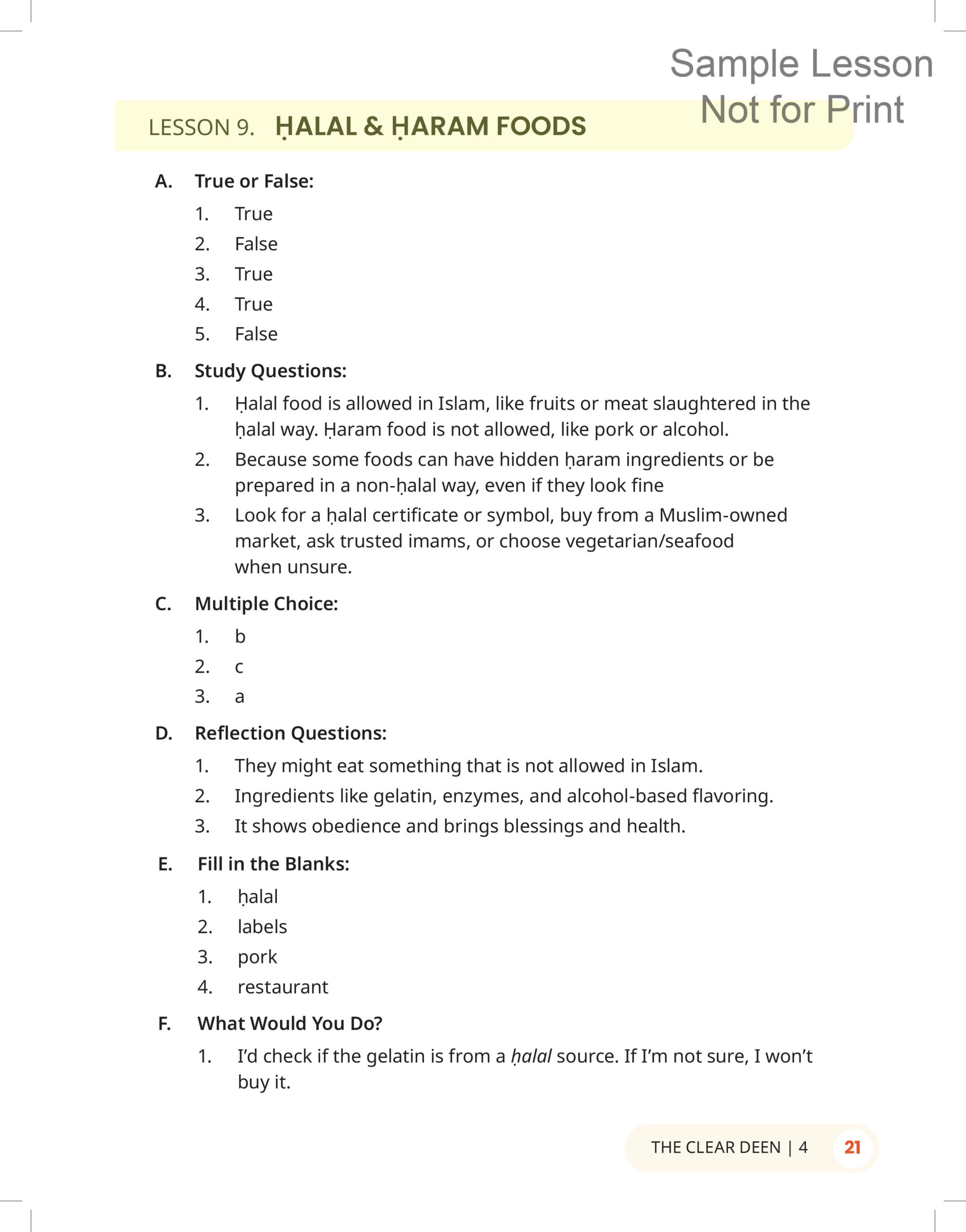
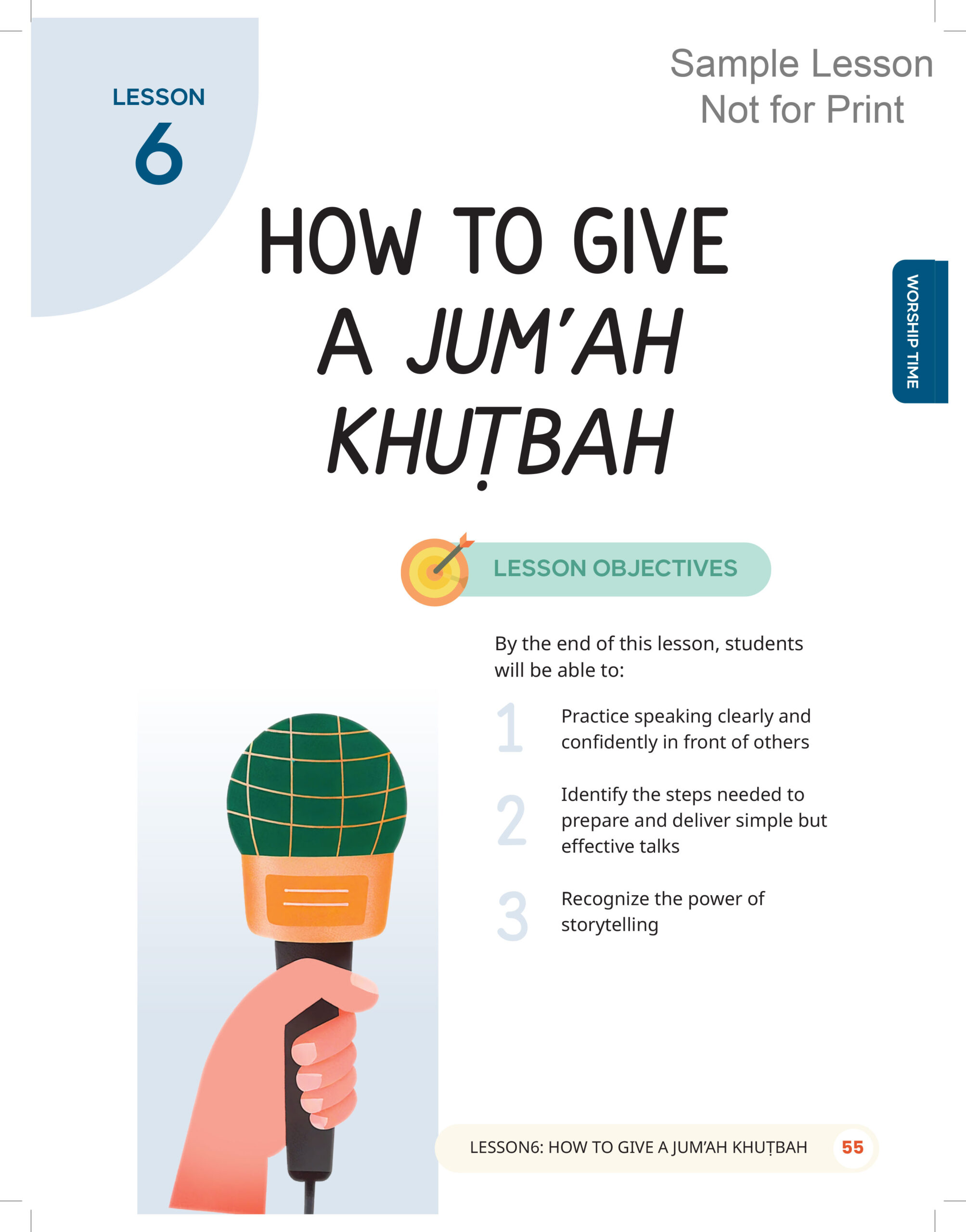
| Ziko makes wuḍu | Ṣalah review | Fixing mistakes in ṣalah (part 1) | How to enjoy ṣalah | How to give a Jum'ah khuṭbah |
| Ziko praying or playing? | Praying with khu-shoo' | Fixing mistakes in ṣalah (part 2) | Ṣalah breakers & missed prayers | Incredible rewards for extra prayers |
| How to pray Fajr | Importance of Sunnah prayers | Islam makes things easy | Importance of fasting | Funeral prayer (janazah) |
| — | — | — | Ḥalal & ḥaram foods | — |
SIRAH TIME (The Prophet’s Legacy)
| Grade 1 | Grade 2 | Grade 3 | Grade 4 | Grade 5 |
|---|---|---|---|---|
| The greatest human who ever lived | What the Prophet ﷺ looked like | The Prophet's healthy lifestyle | The Prophet ﷺ: The perfect teacher | Ṣaḥabah: The best generation |
| The Prophet's early life in Makkah | The legacy of the Prophet ﷺ | When the Prophet ﷺ gave hope | When the Prophet ﷺ corrected others | The Prophet's art of winning hearts |
| The Prophet ﷺ after receiving revelation | The greatest leader | When the Prophet ﷺ smiled | When the Prophet ﷺ gave advice | How Allah guided the ṣaḥabah |
| The Prophet's life in Madinah | The Prophet's positive attitude | When the Prophet ﷺ cried | When the Prophet ﷺ told stories | Stories of Salman & 'Omair |
| — | — | When the Prophet ﷺ got upset | When the Prophet ﷺ gave examples | — |
FAITH TIME (’Aqidah)
| Grade 1 | Grade 2 | Grade 3 | Grade 4 | Grade 5 |
|---|---|---|---|---|
| Allah's Beautiful Names | Body, mind & soul | Allah's Qualities: His ability to create | Tawḥid: Allah's oneness | Taqwa: Keeping Allah in mind |
| Kevin's journey to Islam (part 1): Masjid tour | Allah's Qualities: His mercy | Why does Allah create people with disabilities? | Shirk: Making others equal to Allah | Ghaflah: The life of distraction |
| Kevin's journey to Islam (part 2): The five pillars of Islam | Allah's Qualities: His authority | No to bullying | Allah's Qualities: His kindness | The tricks of Shayṭan (part 1) |
| Kevin's journey to Islam (part 3): The six articles of faith | The six articles of faith | Caring for animals | Allah's Qualities: His power | The tricks of Shayṭan (part 2) |
| Kevin's journey to Islam (part 4): Becoming Muslim | Does Allah need our worship? | — | — | Allah's Qualities: His forgiveness |
QURAN TIME (Tafsir & Tadabbur)
| Grade 1 | Grade 2 | Grade 3 | Grade 4 | Grade 5 |
|---|---|---|---|---|
| Surah Al-Fatiḥah (1) | Surah At-Takathur (102) | Surah Al-Feel (105) | Surah Al-'Alaq (96) | Last ayah of Surah Al-Fatḥ (48:29) |
| Surah Al-Ikhlaṣ (112) | Surah An-Naṣr (110) | Surah Quraysh (106) | Surah Al-Qadr (97) | Surah Al-Fajr (89) |
| Surah Al-'Aṣr (103) | Surah Al-Falaq (113) | Surah Al-Ma'oon (107) | Surah Aḍ-Ḍuḥa (93) | Surah Al-A'la (87) |
| Surah Al-Kawthar (108) | Surah An-Nas (114) | Ayatul-Kursi (2:255) | Surah Ash-Sharḥ (94) | Surah An-Naba' (78) |
HISTORY TIME (Stories of the Prophets)
| Grade 1 | Grade 2 | Grade 3 | Grade 4 | Grade 5 |
|---|---|---|---|---|
| Adam (part 1) | Prophet Ibrahim | Prophet Yunus | Prophet Ṣaliḥ & the she-camel | Prophet Yusuf |
| Adam (part 2) | Hajar & Isma'il | Prophet Hud | Prophet Ayyoub | Prophet Luṭ |
| Prophet Nuḥ (part 1) | Prophet Isma'il | Prophet Shu'aib | Prophet Dawood | Prophet Musa & Pharaoh |
| Prophet Nuḥ (part 2) | Prophet Isḥaq | Idol-worship & blind following | Prophet Sulaiman | Prophet Zakariya & Yaḥya |
| — | — | — | — | Prophet 'Isa |
AⱫKAR TIME (Du’as & Words of Praise for Allah)
| Grade 1 | Grade 2 | Grade 3 | Grade 4 | Grade 5 |
|---|---|---|---|---|
| Ta-shahhud (part 1) | What to say before sleeping | Aⱬkar and the imam's horse | Du'a seeing something nice | Master du'a for forgiveness |
| Ta-shahhud (part 2) | What to say when leaving the house | The aⱬan story | Entering & leaving masjid | Aⱬkar after ṣalah |
| Du'a before & after eating | What to say after sneezing | What to say during & after the aⱬan | Du'a at end of gathering | A du'a that's better than gold |
| Say "in-sha-Allah" | Important Islamic phrases | Du'a for new clothes | Du'a before traveling | Du'a after waking at night |
Why This Work Is Needed
My children have been in Islamic schools their entire lives, both in the US and Canada. They’ve studied multiple curricula that covered many key topics. While these textbooks certainly laid an important foundation, I always felt something crucial was missing. I continued searching for a curriculum that was not only informative, but also engaging and practical. Eventually, deep reflection led to interesting insights.
Have you ever wondered why many people prefer certain Qur’an reciters over others, even though all are reciting the same text? The same principle applies to public speakers and writers who may cover similar topics. Over the years, I’ve come to realize that what makes a message truly effective and memorable comes down to two essential components: content and delivery. In other words, it needs both substance and style. You can have the best content in the world, but if the delivery fails to engage or connect with people, the message will definitely fall flat.
This principle applies directly to teaching our children, regardless of their age or setting. If we want Islamic knowledge to reach not only their minds but also their hearts, it must be presented in a way that speaks to them and inspires them to feel proud of their Muslim identity and Islamic values, especially in today’s challenging times. This is why we have utilized the power of storytelling and vibrant illustrations, making The Clear Deen Textbooks unique, innovative, and impactful.
The Power of Storytelling
It is no secret that attention spans have shortened in recent years, largely due to the fast pace of modern life and constant screen exposure. As a result, many young students struggle to remain focused both at school and at home. To address this challenge, The Clear Deen keeps students engaged through meaningful storytelling and interactive activities.
Storytelling is one of the most powerful tools in teaching because it captures attention, sparks imagination, and helps students connect emotionally with what they learn. As some scholars beautifully said, “Stories are among the forces of Allah,” because they captivate hearts and awaken faith.
القَصَصُ جُنْدٌ مِنْ جُنُودِ اللهِ
That is why the Quran and Ḥadith are full of profound stories that bring faith to life. Imam Ibn Ḥibban reported that after the first few surahs of the Quran were revealed without stories, the companions eagerly asked the Prophet ﷺ to share some stories with them. So, Allah revealed Surah Yusuf (12), followed by many others filled with powerful stories.
أُنْزِلَ القُرْآنُ عَلَى رَسُولِ اللهِ ﷺ فَتَلَا عَلَيْهِمْ زَمَانًا، فَقَالُوا: يَا رَسُولَ اللهِ، لَوْ قَصَصْتَ عَلَيْنَا، فَأَنْزَلَ اللهُ سُورَةَ يُوسُفَ
Can you imagine? Even the ṣaḥabah loved learning through stories! These stories empowered the Muslim community to grow in faith, trust Allah’s plan, and face challenges with courage. The Quran instructs the Prophet ﷺ in Surah Hud (11:120), “We relate to you the stories of (earlier) messengers to reassure your heart.”
(وَكُلًّا نَّقُصُّ عَلَيْكَ مِنْ أَنبَاءِ الرُّسُلِ مَا نُثَبِّتُ بِهِ فُؤَادَكَ)
In the same way, this story-based curriculum brings subjects like fiqh, ’aqidah, and tafsir to life through lesson-oriented stories. To make lessons more appealing to young learners, powerful and relatable stories are accompanied by beautiful illustrations that reflect the diversity of the Muslim community, featuring men and women, boys and girls from different races and cultures.
With the charm of social media and the influence of the gaming and movie industries, many young people today are overwhelmed by empty fantasies and fictional superheroes. As a result, there are very few real role models for Muslim students living in the 21st century to look up to, especially amid the many challenges facing much of the Muslim world. This is why it is very important for educators to highlight stories of true models of excellence from our rich Islamic history, including the Prophet ﷺ and his companions, other prophets, and remarkable men and women who left lasting legacies of faith and character.
May Allah bless this effort, reward us generously for our hard work, and forgive our shortcomings. May The Clear Deen be a source of light and guidance for students, parents, and teachers. May it empower future generations to grow firm in faith, proud of their identity, confident in their beliefs, and full of goodness for humanity. Ameen!
Written in Chicago, USA on the 12th of Rabi’ Al-Awwal 1447 AH,
September 4, 2025 CE (on the anniversary of the Prophet’s birth).
وَكَانَ الفَرَاغُ مِنْ هَذِهِ المُقَدِّمَةِ بِمَدِينَةِ شِيكَاغُو الأمْرِيكِيَّة، فِي ذِكرَى مِيلَادِ خَيْرِ البَرِيَّة ﷺ،
12 رَبِيع الأوَّل 1447 هِجْرِيَّة، المُوَافِق 4 سِبتَمبِر 2025 مِيلَادِيَّة.
How Lessons Are Organized
Each of The Clear Deen Textbooks (grades 1-5) is made up of 30 lessons, one for each week of the academic year. These lessons are age-appropriate, aligned with literacy levels, and are organized into seven units:
- Story Time brings Islamic values and manners (adab and akhlaq) to life through powerful and profound stories.
- Worship Time explains the essential fiqh rulings on purification, prayer, and other acts of worship, based on the teachings of the Quran and Sunnah and in light of the four maⱬhabs.
- Sirah Time explores the life and legacy of Prophet Muḥammad ﷺ in a way students can relate to.
- Faith Time covers the foundations of Muslim belief, including ’aqidah and Allah’s beautiful names.
- Quran Time focuses on the tafsir of selected passages, along with the top 600 words that make up over 90% of the Quran.
- History Time highlights inspiring figures and role models from our rich history.
- Aⱬkar Time teaches important words of praise and daily prayers for remembering Allah c.
These lessons were developed with input from educators and parents, refined through feedback from actual students in grades 1-5 to ensure clarity and readability, and reviewed by teachers and professional editors for accuracy, scholarship, and impact. Working closely with our dedicated educational consultants, every effort has been made to ensure alignment with academic standards.
Homeschool-Friendly Curriculum
The Clear Deen Textbooks are thoughtfully designed for both classroom and homeschooling settings, making it easy for families to nurture Islamic learning at home even without formal training. With this goal in mind, many homeschooling parents across the US and Canada were consulted throughout the development of this series. Thanks to its clear structure and flexible activities, this curriculum makes learning engaging, practical, and spiritually enriching for everyone, including homeschoolers, independent learners, and solo students

The Activate section offers a wide range of activity choices to suit every learning environment. Homeschoolers can easily adapt what works best for them. For example:
- Popcorn Reading can become pair or solo reading at home.
- Group Discussion Questions can easily be turned into Reflection Questions or prompts for journaling or family conversations.
- Role-playing can be done with parents or siblings, or simply turned into ideas for comic strips or puppet shows.
- Activities are short, fun, hands-on tasks completed during the lesson to help children practice, apply, or demonstrate their understanding in an enjoyable and interactive way.
- Projects are typically longer, creative tasks that help children explore a topic more deeply and connect it to real life. They may include poster-making, storytelling, family kindness challenges, while partner tasks can become independent research, creative writing, or art projects.
- Personal Affirmation is a short statement that helps children express their faith through action, based on the main message of each lesson.
- An Exit Ticket helps teachers check what students understood from the lesson, such as a concept or a value. It also gives students a moment to reflect on what they learned and how they can apply it in their daily lives.
How Lessons Are Organized
When it comes to lesson pacing, there are two main styles:
- Unified Lesson Approach (ULA): Related lessons are grouped into one unit (e.g., sirah, fiqh, or ’aqidah). Each of the seven units is taught from start to finish before moving to the next. This method works well for scaffolding, helping students understand both the big picture and the finer details of each subject.
- Rotating Lesson Approach (RLA): Lessons rotate between subjects (e.g., sirah one week, fiqh the next, then ’aqidah). This variety keeps children engaged and prevents monotony. As far as this curriculum is concerned, teachers may choose to rotate lessons between all seven units throughout the academic year or focus on 3-4 units per semester.
Even though the lessons in The Clear Deen are organized into unified units, the Pacing Chart accommodates both methods. This flexibility allows teachers and homeschooling parents to adjust the pacing according to their schedule, teaching style, and students’ learning needs and progress. Part-time and weekend schools following a 3-term schedule can use either approach to teach 10 of the 30 lessons per term, ensuring balanced coverage of all subjects by the end of the year
Workbooks & Pacing Charts
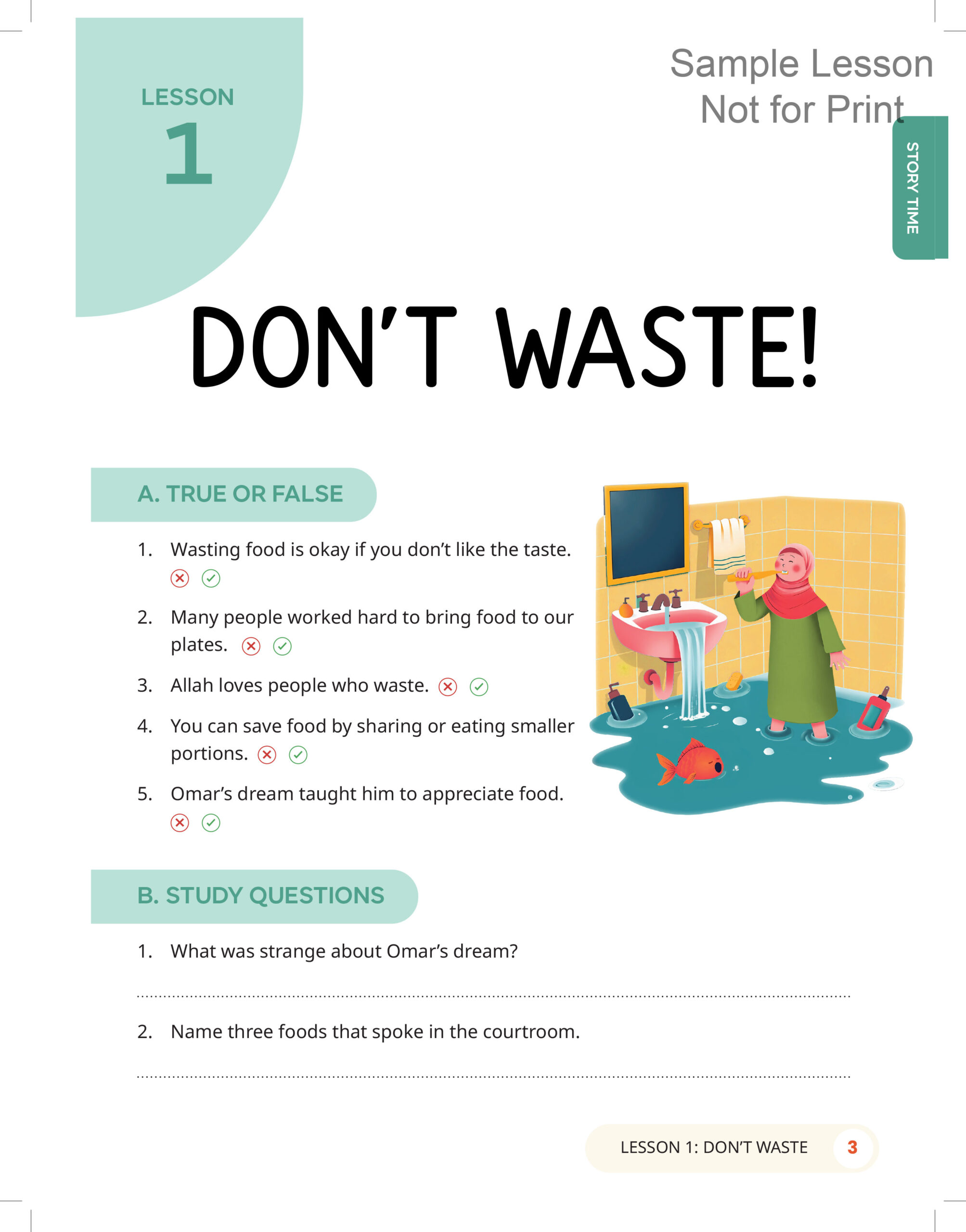
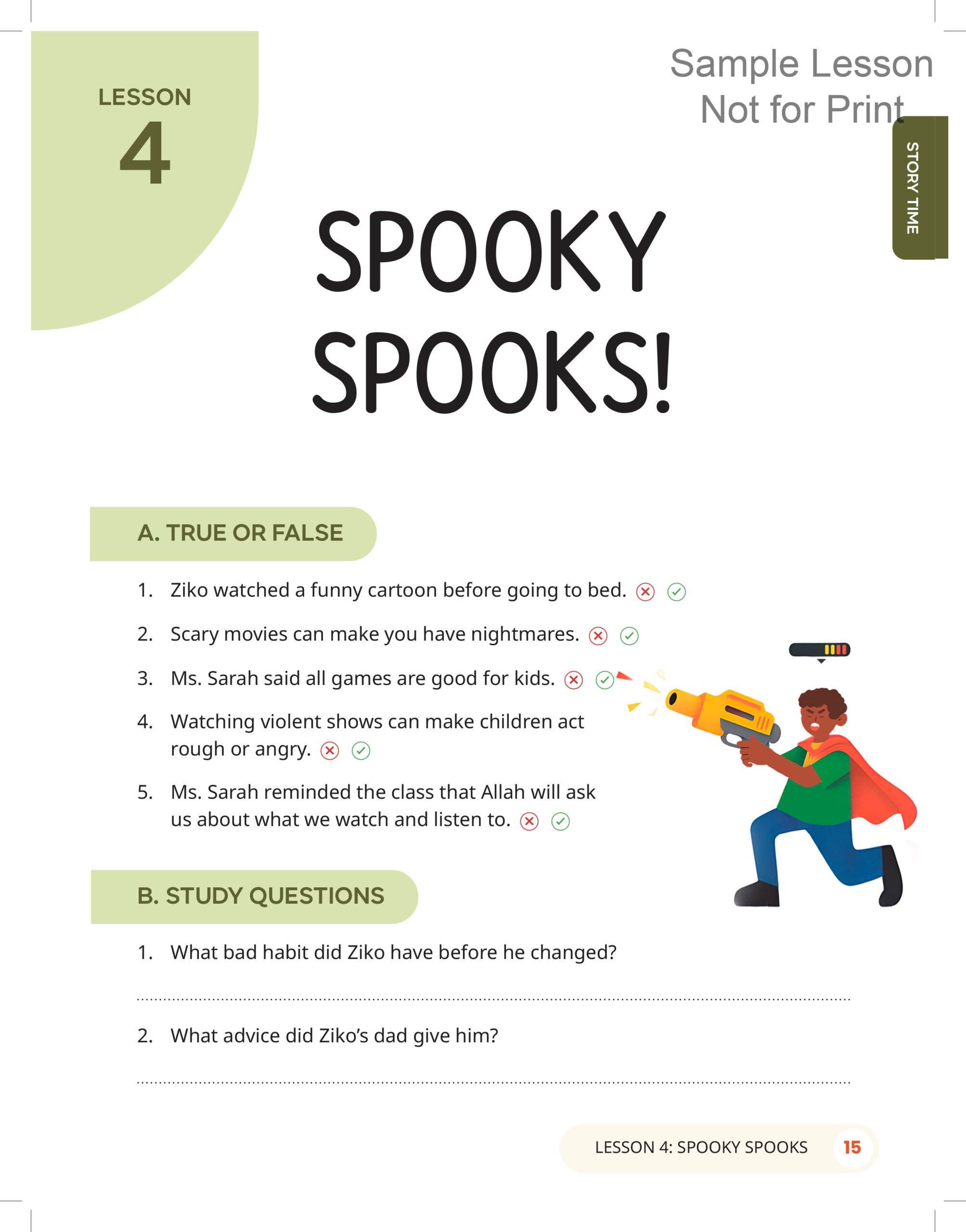
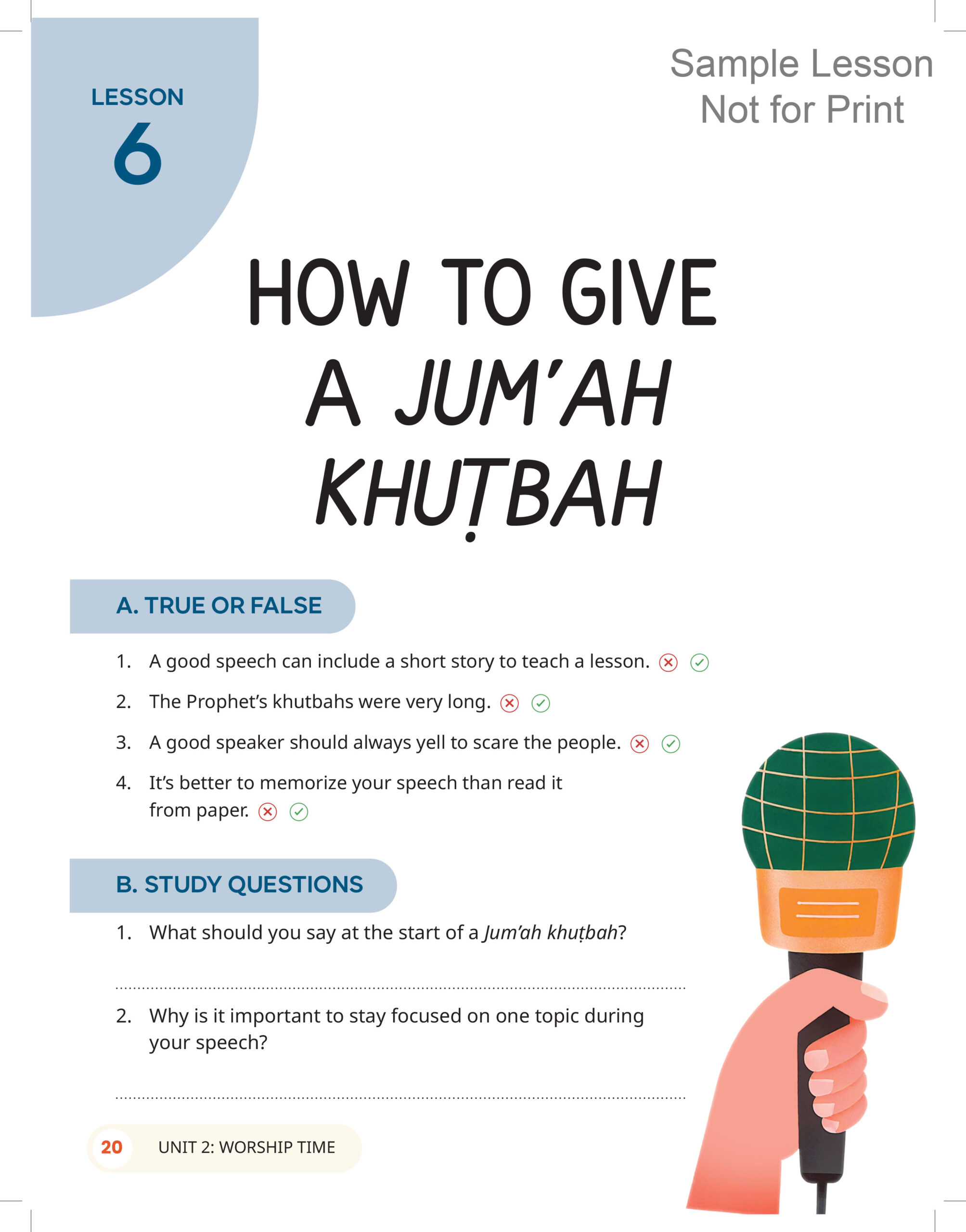
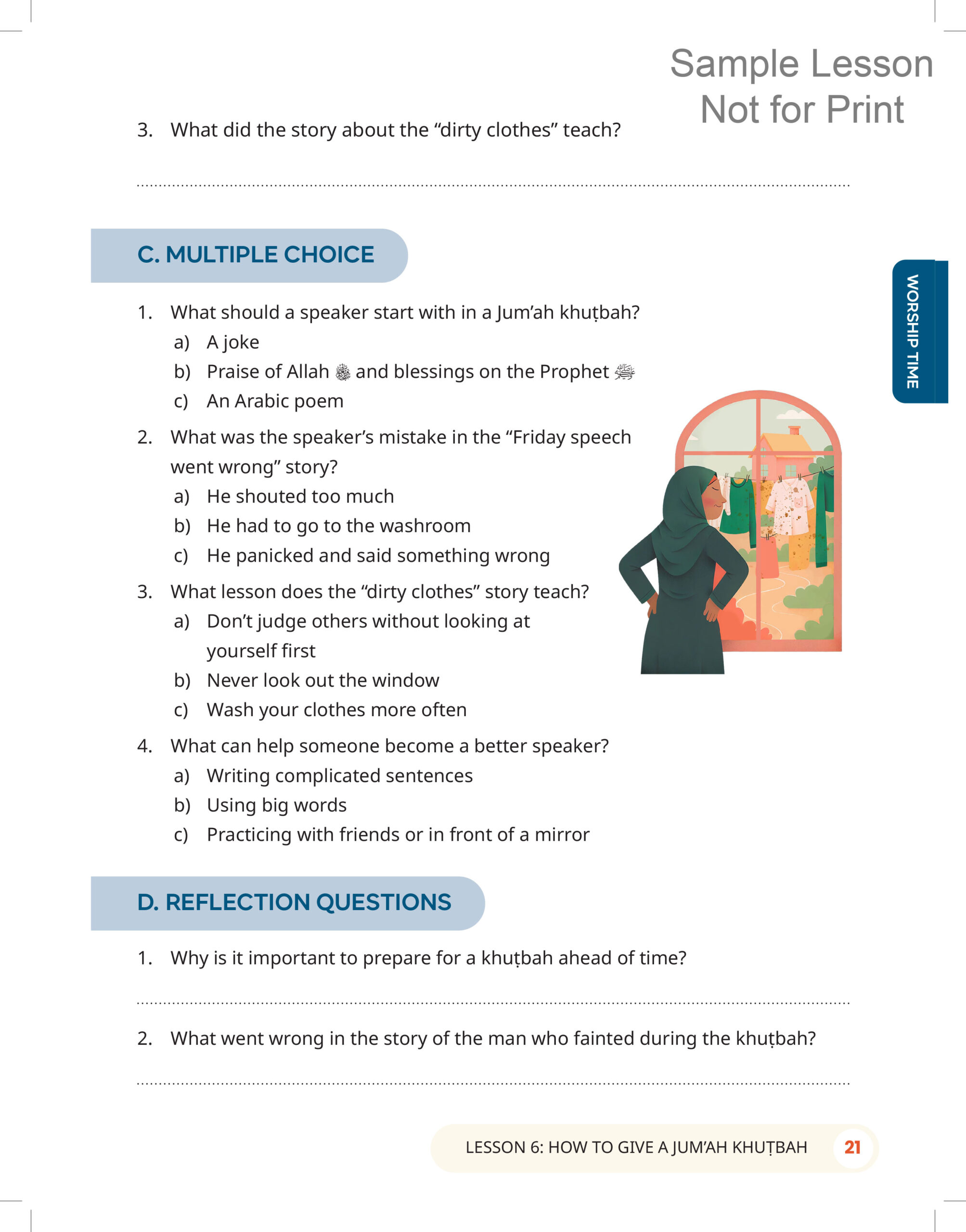
Each Workbook includes a variety of easy, moderate, and challenging question types to check students’ understanding, encourage critical thinking, and promote real-life application of the lesson. At times, a question may be repeated in a different format to reinforce key learning points.
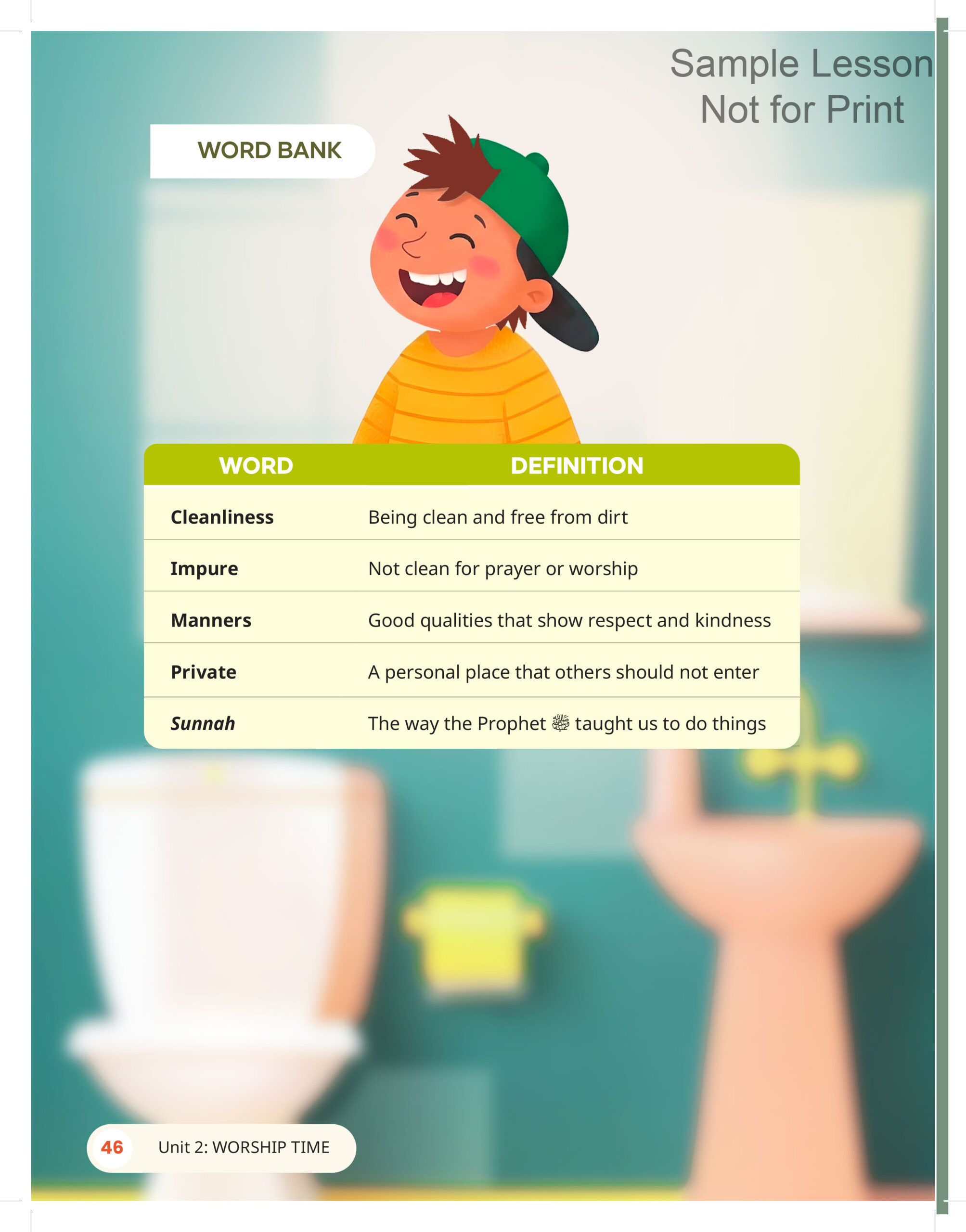
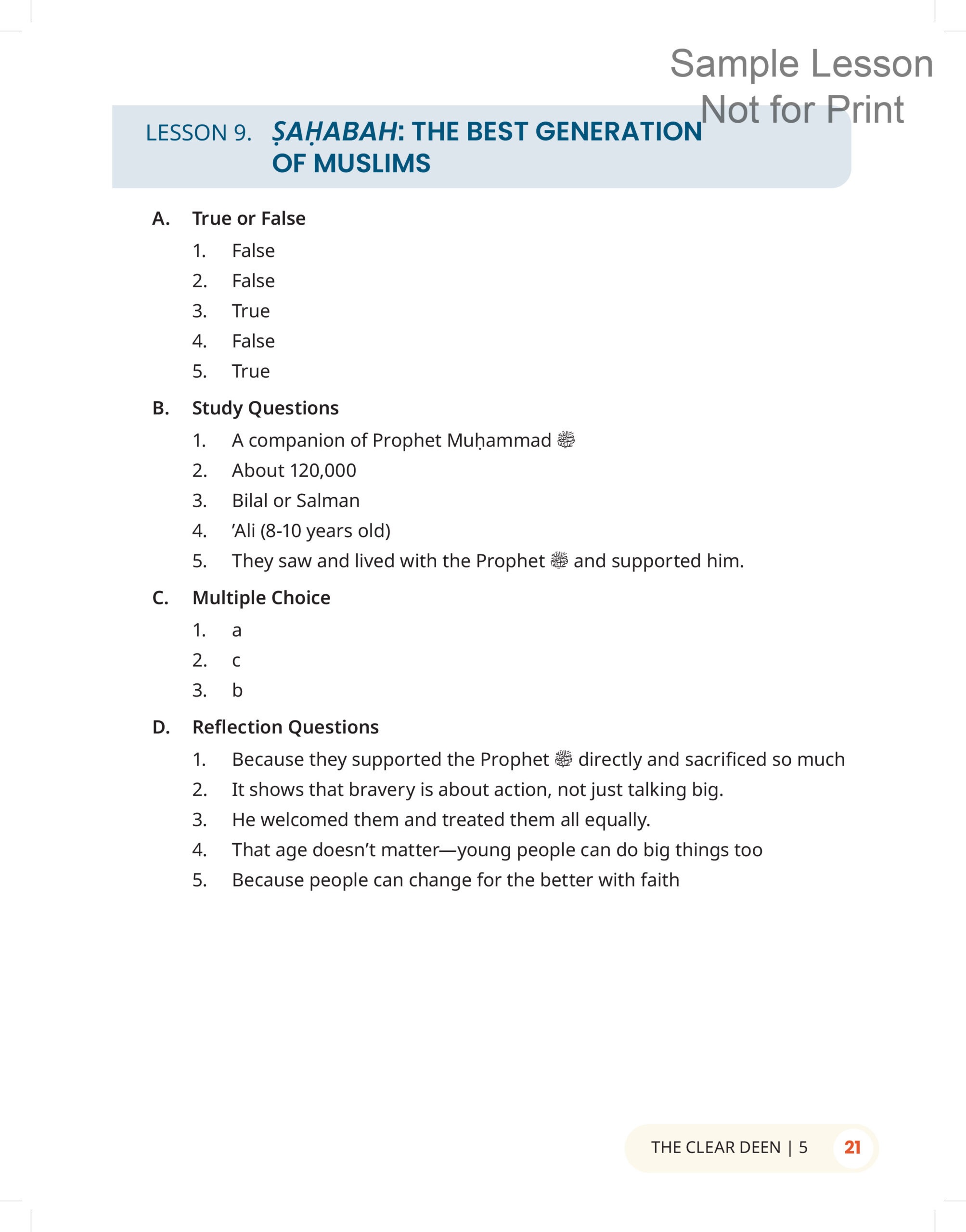
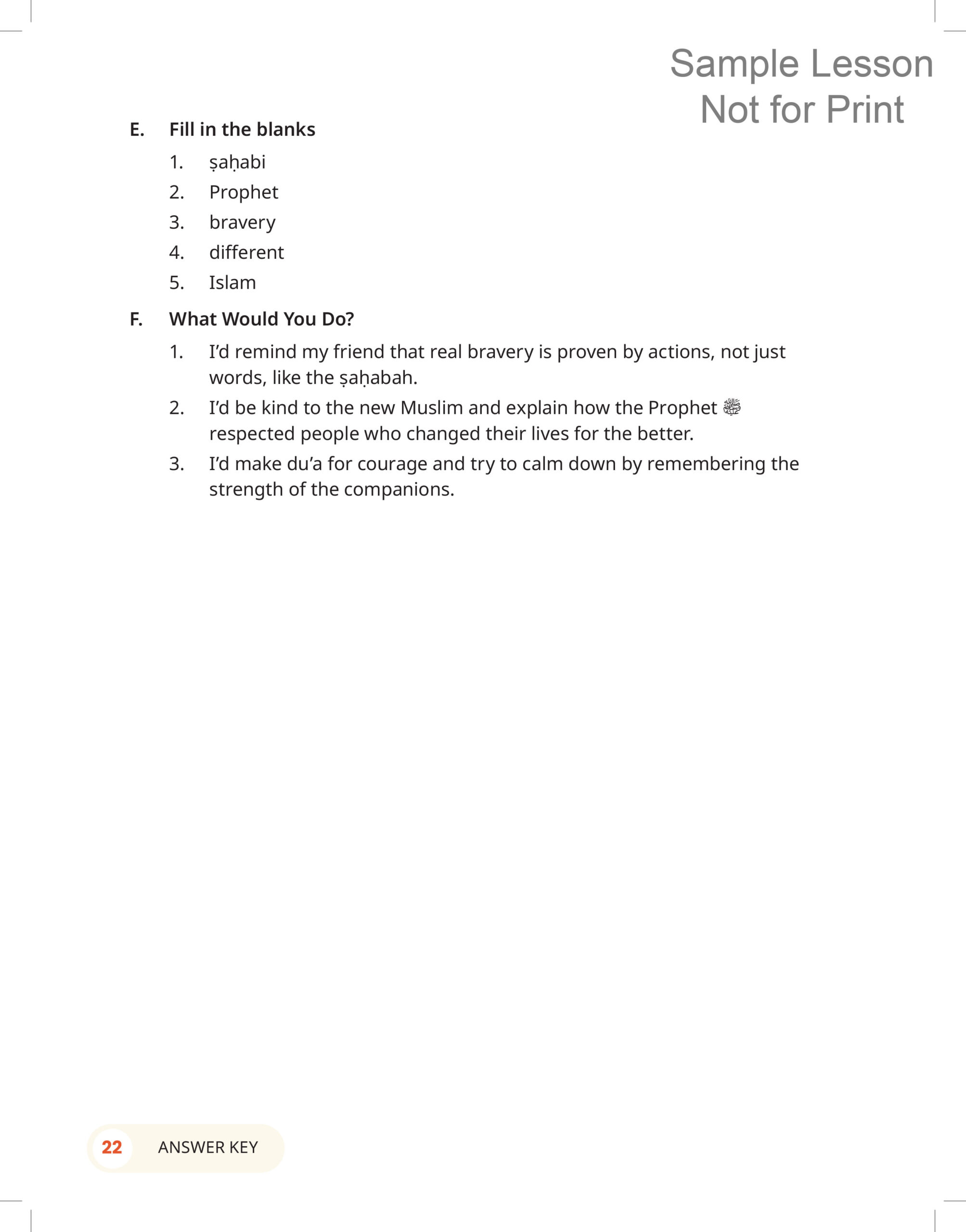
The Pacing Chart includes both unified and rotating lesson approaches, along with the complete Answer Key to the Workbook. To make lesson planning simple, the textbooks also include Unit Overviews, Lesson Objectives, Word Banks, and supporting Activities, giving both teachers and students easy access to everything they need.
ACADEMIC FRAMEWORK & STRUCTURE
Teaching & Learning Models
According to a 2017 Pew Research Center survey, 25% of Muslim children raised in the US no longer identify as Muslim later in life. This alarming statistic raises important questions about how Islam is taught to the next generation. In a world full of distractions and confusion, The Clear Deen offers clarity and connection. It is simple to follow, rich in content, and firmly rooted in authentic Islamic tradition. Built on ta’leem (education), tarbiyah (character development), and tazkiyah (spiritual growth), these creative textbooks are designed to be engaging, practical, and relevant to the realities our children live in.
This holistic, balanced approach nurtures both the mind and soul, making learning transformational, not merely informational. The goal is to shape students’ character, strengthen their relationship with Allah c, and prepare them to engage positively with society.

This robust series is written and crafted to be accessible to a wide range of learners, including homeschooling families, teachers and students in Islamic or weekend schools, and parents who wish to take an active role in teaching their children the deen (the Muslim way of life). To achieve this goal, The Clear Deen integrates some academically proven teaching and learning models—namely ESA (Engage, Study, Activate), Bloom’s Taxonomy, SEL (Social-Emotional Learning), and IBL (Inquiry-Based Learning).
1) ESA Model (Engage, Study, Activate)
Introduced by Jeremy Harmer in 1998, the ESA model has transformed classroom learning by emphasizing student involvement, curiosity, and real-world application. Harmer demonstrated that students learn best when they are actively engaged rather than listening passively. Though originally developed for language learning, ESA has proven equally powerful across various fields of education, including Islamic studies. When applied effectively, it creates a learning environment where children not only understand the material but also connect with it on a personal level and apply it in meaningful ways. The ESA style consists of three sections, each playing a vital role:

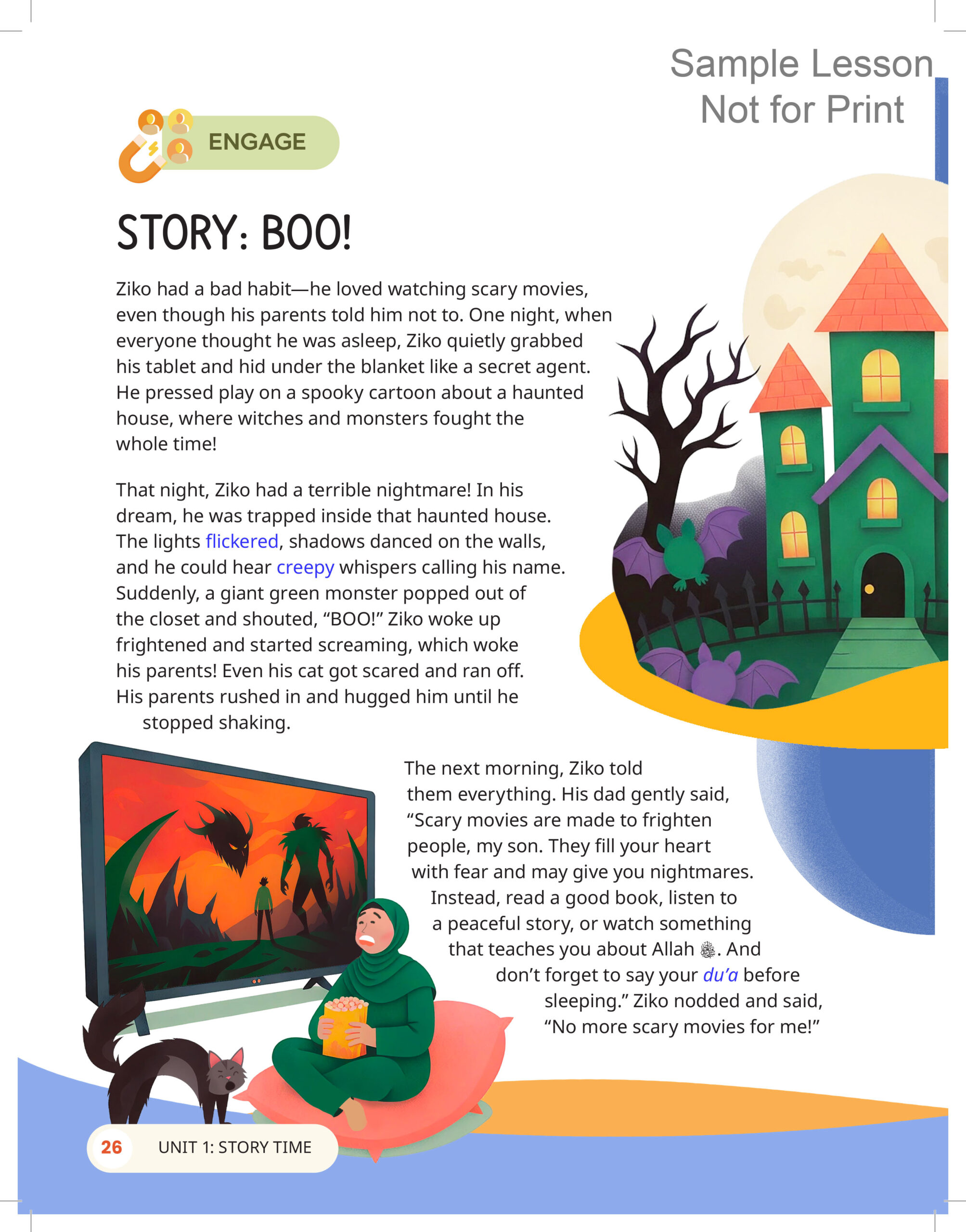
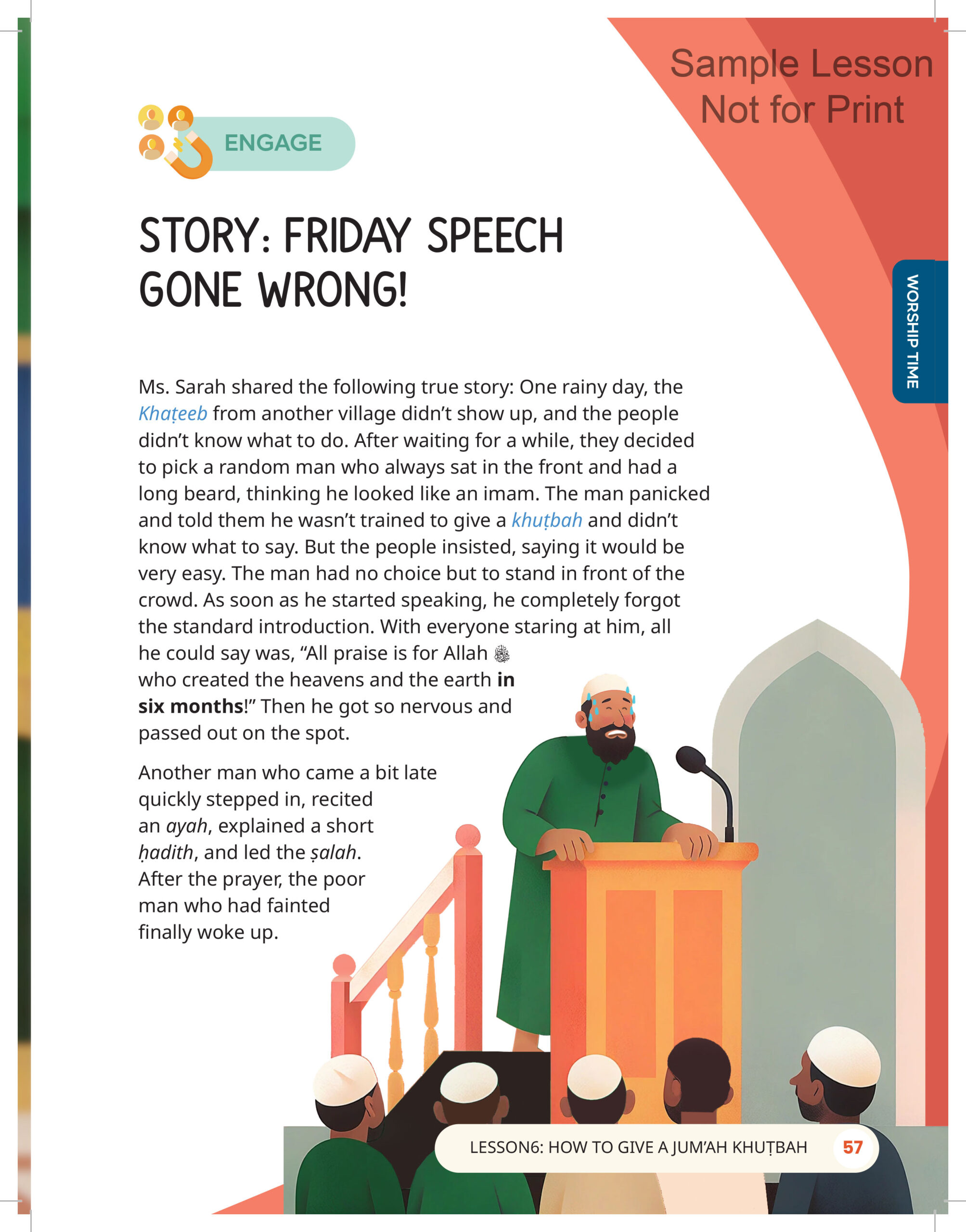
The Engage section captures attention with a hook such as an interesting story, image, question, or real-life example, which sparks curiosity and prepares students to learn. For example, the story of Prophet Yunus (Grade 3) begins with a modern story of a student trapped in an elevator, which masterfully connects to the experience of Yunus in the whale.

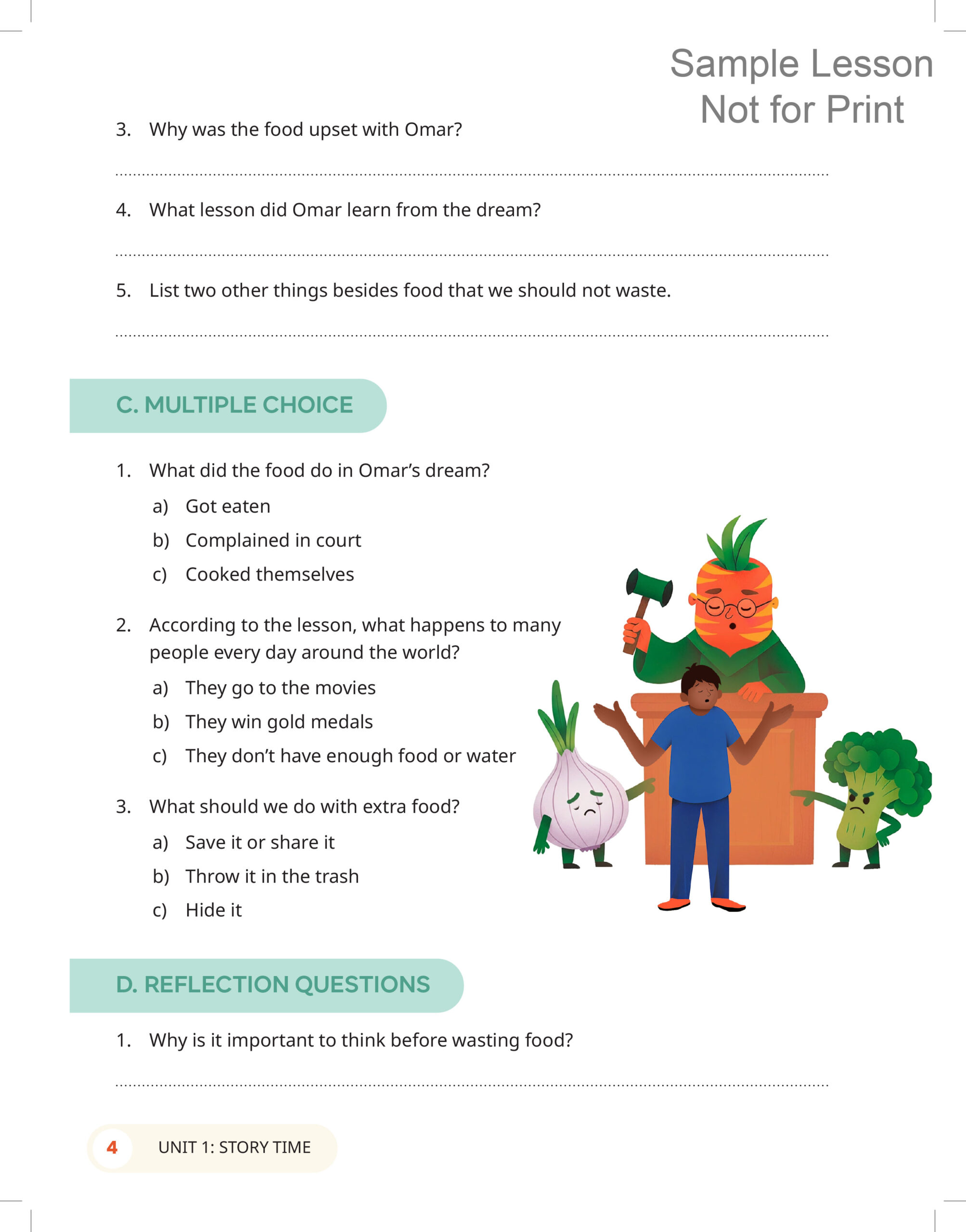
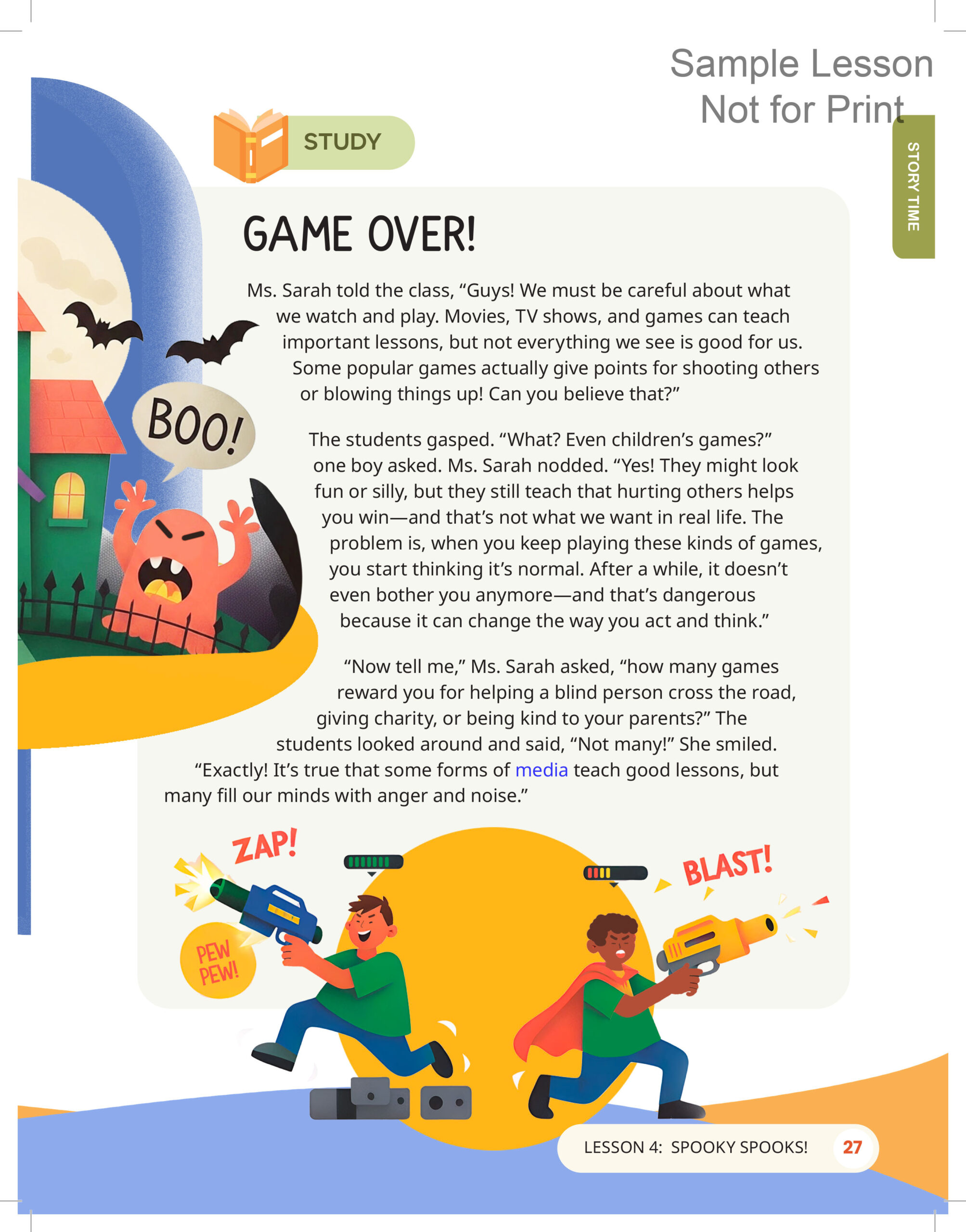
The Study section guides students to explore the main concept of the lesson. For example, the lesson on wasting (Grade 2) combines teachings from the Quran and the Sunnah with shocking statistics on waste, followed by practical suggestions for children to avoid this bad habit.

The Activate section empowers students to participate and put knowledge into action through role-playing, hands-on activities, creative projects, and group discussions. For example, the lesson on Allah’s infinite power (Grade 4) is reinforced with superhero activities that highlight human weaknesses and limitations, compared to Allah’s might and creative power.
2) Bloom’s Taxonomy
To enhance the learning experience, we have incorporated key elements from the Revised Bloom’s Taxonomy (2001), which highlights six stages of learning: remembering, understanding, applying, analyzing, evaluating, and creating. These stages have been simplified and adapted for young learners so they can grow naturally in both knowledge and skill. For example, here is how these elements are integrated into a Grade 4 lesson on tawḥid (Allah’s Oneness):
| Stage | Empowers children to |
|---|---|
| 1) Remembering | Define tawḥid and its three categories |
| 2) Understanding | Explain why the universe cannot have more than one God |
| 3) Applying | Identify ways to practice tawḥid in daily life |
| 4) Analyzing | Examine what happens when people commit shirk (making others equal to Allah) |
| 5) Evaluating | Discuss why worshiping only Allah brings peace and clarity |
| 6) Creating | Design a poster on the three types of tawḥid and their meanings |
These stages inspire active and purposeful learning—the way Islamic pedagogy is meant to be. Rather than memorizing information mechanically, students learn to understand, internalize, and apply what they learn.
3) Social-Emotional Learning (SEL)
SEL helps develop the skills to understand ourselves, manage emotions, care for others, and make responsible choices. Islam has always emphasized these values, which are deeply rooted in the Quran and the Sunnah. For example, the five main SEL skills align directly with the Prophet’s sirah:
- Self-awareness: He ﷺ expressed heartfelt sadness at the death of his young son Ibrahim n, saying it was an act of compassion, not weakness.
- Self-management: He ﷺ taught that true strength lies in controlling one’s anger.
- Social awareness: He ﷺ truly cared for the poor, orphans, and widows.
- Relationship skills: He ﷺ built strong bonds within his community and turned former enemies into loyal friends.
- Responsible decision-making: He ﷺ consulted his companions before making important decisions that served the best interest of his community.
By weaving SEL into The Clear Deen, lessons become more than information. They shape character, empathy, and resilience, preparing students to live as strong and compassionate Muslims.
4) Inquiry-Based Learning (IBL)
Children are naturally inquisitive, especially in their formative years. They may ask challenging questions like, “Does Allah need our worship?” or “Why is there evil and suffering in the world?” It’s important to answer these questions with care so our children grow up confident in their faith.
Even the angels asked Allah c about the wisdom of placing the human race in charge of the earth (2:30), and Prophet Ibrahim n asked how Allah c would bring the dead back to life so his heart could be reassured (2:260). In this curriculum, we focus not only on the “what,” but also on the “why.” For example, we don’t just teach children what to do when they pray, but also why they pray and how to enjoy ṣalah.
IBL encourages students to actively ask questions and explore ideas, rather than rely on memorization and passive listening. You’ll find many examples of IBL woven into the students’ interactions with the teachers, Ms. Sarah and Mr. Jamal, as well as throughout the Engage, Activate, and Workbook sections, where learners are guided to think critically, investigate answers, and draw their own conclusions.
This student-centered approach beautifully aligns with the Islamic concepts of Tafakkur (pondering over Allah’s creation) and Tadabbur (reflecting on His revelation), fostering curiosity, critical thinking, teamwork, and problem-solving.